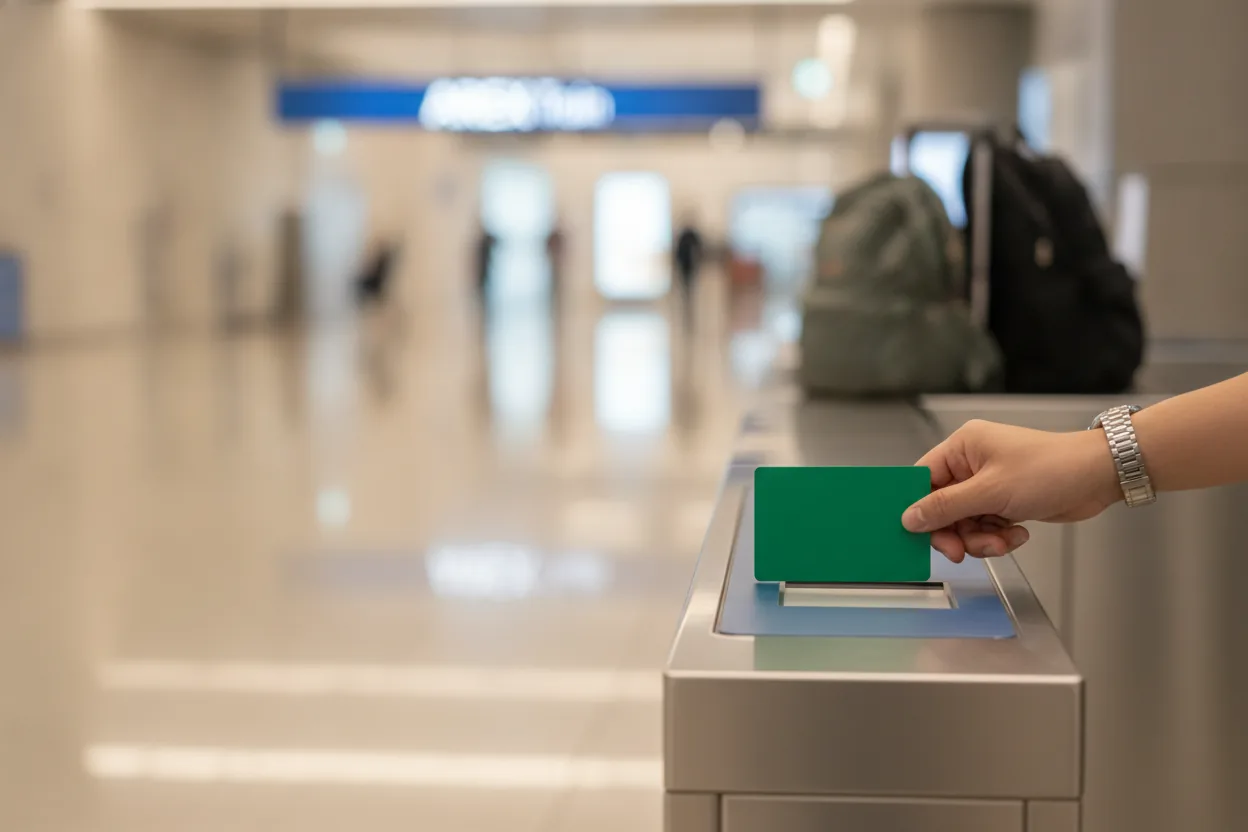
What is a T-money card and why do visitors need one
A T-money card never expires and works nationwide, so it seems like an easy airport purchase before you leave Incheon. But whether you actually need one before clearing the terminal depends entirely on how you're getting into Seoul, not on where you happen to be standing.
Seoul's newer Climate Card only works within the city. A T-money card works everywhere, and that matters if you're planning trips to Busan, Jeju Island, or anywhere outside the capital. Subways calculate your fare automatically when you tap in and out, but buses are different: you have to tap off manually when you exit, or you lose your transfer discount and probably get overcharged. There's also a foreigner-specific version called the Mpass card, issued through Tmoney Town near Seoul Station Exit 10, which bundles tourist discounts and transit passes together.
Knowing what the card actually does sets up the real question travelers face at Incheon: airport or downtown.
Does your arrival plan decide this for you
The real deciding factor isn't airport versus downtown. It's what you need the card for immediately after landing. Taking the AREX train or an airport bus into Seoul means you need a T-money card before you leave the airport, full stop, since both require tapping in with the card. Wait until downtown and you'll have to pay for that airport-to-city leg some other way, which is usually a worse deal.
Airport booths and vending machines aren't always reliable late at night, though. Land after most counters close, or hit a long line during peak arrival hours, and you can end up stuck. Locals point to one workaround: the CU convenience store near Myeongdong Station Exit 6, where staff are used to tourist requests and can issue or recharge a card in about two minutes. That only helps, of course, if you've already made it downtown some other way.
Subway vending machines throughout Seoul, positioned near ticket gates, also sell and recharge T-money cards, so once you're in the city, getting or topping up a card is rarely a problem. The tighter constraint is the airport-to-downtown leg itself. If that trip depends on tapping a T-money card, buy it at Incheon before you leave. Arranging a taxi, private transfer, or an all-in-one card like Wow Pass instead? Then you can wait. Wow Pass deserves a closer look before you decide.
Long-term residents bring up Wow Pass constantly when advising newcomers. It converts foreign currency into Korean won and stores it on a card that doubles as both a T-money card and a general payment card, worth comparing if you don't want to juggle separate cash and transit cards. You can also recharge any of these cards at subway kiosks using an overseas credit or debit card, but your card issuer sets the exchange rate, not Tmoney, so costs vary more than people expect.
The practical rule locals repeat after decades in Korea: get the card at the airport if your route into Seoul requires it, and treat convenience stores downtown as backup, never the primary plan. That settles the arrival-day decision. What happens to that same card and its balance after you leave Korea is the next question worth answering.
Your card and its balance don't have to end when your trip does
A T-money card never expires, so there's zero urgency to spend down the balance before leaving Korea. Plenty of repeat visitors just toss the card in a drawer and reuse it on their next trip. The balance carries over indefinitely, and the card itself needs no reactivation.
Want your money back instead? Refunds are possible, but they come with strings attached. Travelers without a Korean bank account typically get partial refunds through machines at convenience stores or subway stations, usually capped at a set amount per transaction. Anyone holding a Korean bank account can walk into Tmoney's headquarters directly for a fuller refund. Tmoney itself recommends spending down the balance before requesting a refund, since the process goes more smoothly that way.
For visitors who'd rather have certainty than flexibility, the Mpass card offers a fixed-fare short-term pass that activates the moment it's loaded, handy if you already know exactly how many days you'll spend in Seoul. The tradeoff: ride past a station outside the pass's covered zone and you'll trigger an extra fare, so it suits concentrated city exploring far better than day trips to places like Busan or Jeju.
So the airport-or-downtown question never really had one answer. Buy the card at Incheon if the AREX train or an airport bus is how you're reaching Seoul. Let a CU near Myeongdong or a subway kiosk handle it if you're arriving some other way. Either path leads to the same card, working identically once loaded, and one that keeps working long after this trip ends, on your next visit to Seoul or a stop in Busan or Jeju, where only T-money, not the Climate Card, gets you through the turnstile.