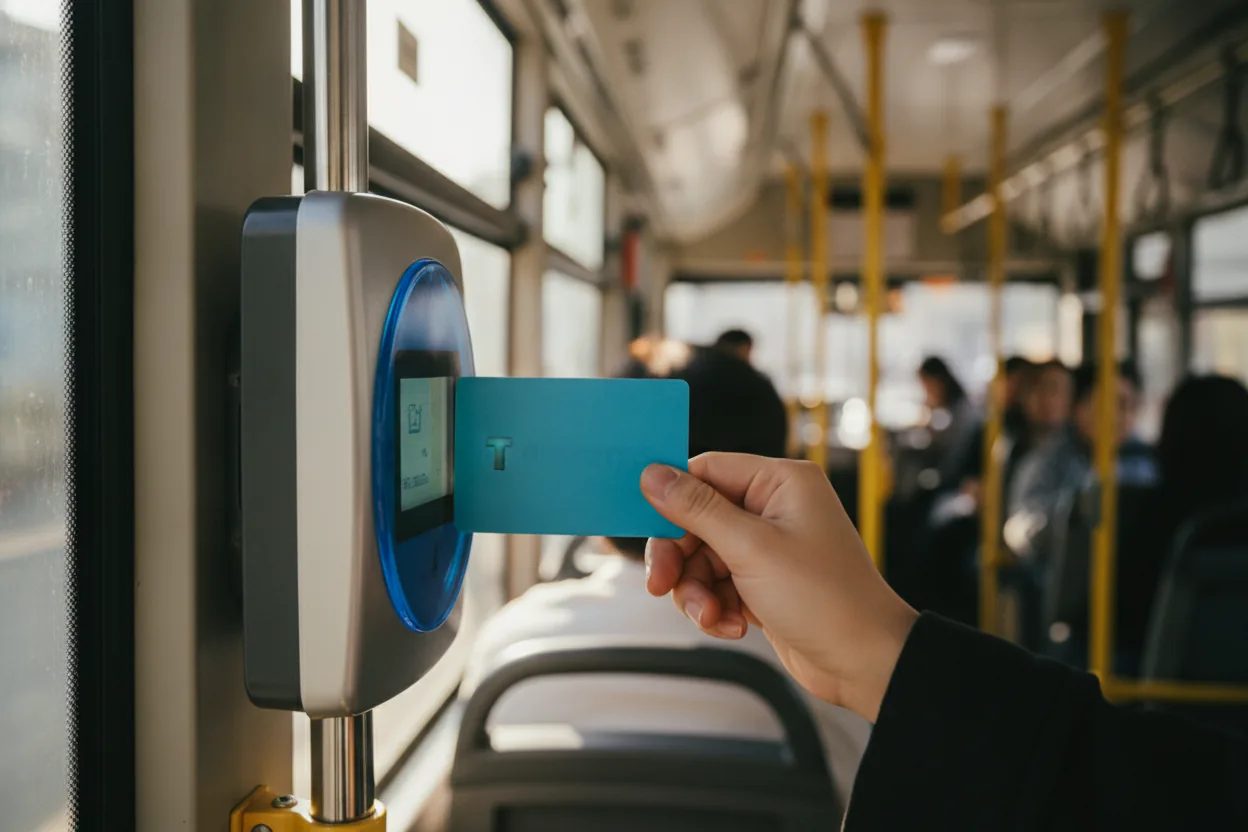
What T-money Transfers Are and How the Discount Works
One rider on Korea Peek forgot to tap out when exiting the bus and got overcharged on every single ride for months without realizing it. T-money's transfer discount sounds like a simple tap-in, tap-out system, but underneath that it's quietly tracking five separate conditions at once. Fail just one, and the savings disappear entirely. So what are those five conditions, and how does a rider avoid tripping one without even noticing?
The core benefit is the transfer discount. Ride the subway and switch to a bus, or vice versa, within 30 minutes, and you only pay the fare difference instead of a second full fare. A subway ride followed by a bus transfer inside that window can end up costing next to nothing extra, compared to paying two full fares in cash.
Three conditions have to hold for this to work: same T-money card for both legs, the transfer has to happen inside the time limit, and the rider has to tap correctly both entering and exiting each vehicle or station. Subway gates force the exit tap, so that part takes care of itself. Buses don't. You have to remember to tap the sensor again on your way off, and nothing stops you if you forget.
Those three conditions sound simple enough, but Seoul's transfer rules carry several exceptions that catch tourists and long-term residents alike. Here are the five specific situations that kill the discount even when a rider thinks they're doing everything right.
The Five Situations That Quietly Cancel the Discount
The discount fails most often over a missed tap-out on a bus. Subway stations physically require a tap to open the exit gate, but city buses just have a card reader near the door, and nothing stops a passenger from walking off without tapping it. According to Trazy's T-money guide, the system then assumes you rode to the last stop on the route and charges the maximum distance fare instead of applying any discount at all. That's exactly what happened to the Korea Peek rider: months of overcharges from one skipped habit.
The second failure case is transferring to the same bus number, or walking back into the same subway station you just left. Kojects' breakdown of the transfer rules is blunt about this: even within the 30-minute window, a transfer to an identical bus line or a re-entry into the same station doesn't qualify. The rule exists to stop people from gaming short back-and-forth trips, but it also snags ordinary riders, like someone who hops off a bus to check a map and reboards the same bus a few minutes later.
Timing is the third failure case. The standard window is 30 minutes between tapping out of one mode and tapping into the next. Kojects notes this stretches to 60 minutes between 9 p.m. and 7 a.m. the following day, covering Seoul's late-night and early-morning service. Miss the window, even by a minute, and the discount is gone. You're charged as if you started a brand new trip.
A fourth limit sits above all of these: there's reportedly a daily cap on how many transfers one T-money card can register. Riders doing unusually complicated multi-leg commutes, bus to subway to another bus to another subway, can hit that ceiling before the day's over. After that, every additional transfer reverts to full fare.
The fifth situation is the most financially damaging, and it comes from letting the balance run too low. The card allows a slightly negative balance on a single ride as a convenience, but once that happens, Korea Peek's guide warns the card typically can't be used again for transfers until it's reloaded, and sometimes the next tap just fails outright at the gate or bus reader. A commuter relying on a transfer chain to get to work can suddenly find the second leg charged in full, or blocked entirely, because the first leg already pushed the balance negative. Avoid all four of the other traps and you're still not safe from this one, which raises the real question: what connects all five?
Why Following One Rule Is Not Enough
All five situations share the same thread. T-money isn't just tracking time, it's tracking taps, balance, route identity, and daily counts all at once, and a slip in any one category kills the discount for that trip. A rider can tap correctly, stay inside the time window, avoid repeat routes, and still lose the discount because the balance slipped negative. Knowing the five failure points is only half the battle. The other half is building habits that cover all of them simultaneously.
Fixing the Behavior, Not Just Learning the Rules
The fix here isn't complicated, even if the rules are. Treat every bus exit as mandatory tap territory, the same way you'd treat a subway gate, because Korea Peek's experience shows exactly how easily months of overcharges slip by unnoticed without that habit. Reload the card before the balance gets anywhere near zero and you sidestep the negative-balance trap completely; top-ups are sold at the same convenience stores, GS25 and CU among them, where you bought the card in the first place. Before transferring, take the two seconds to check whether the connecting bus shares a route number with the one you just left, or whether you're walking back into the same subway station. That one glance stops a silently rejected discount before it happens. These habits cost almost nothing to maintain, but here's what you actually lose when one of them slips.
The Math Behind a Single Missed Tap
Run the numbers and the stakes get clear fast. The card itself saves a bit per trip over single-journey paper tickets, and that adds up to cover the cost of the card after a handful of transfer-heavy rides. But one missed tap-out, one same-route transfer, or one negative-balance ride wipes out that savings in a single trip by triggering a full second fare instead of the discounted difference. The card is cheap. The behavior around using it right is where the real money gets saved or lost.
Why Foreign Residents Cannot Simply Switch Cards
Foreign residents run into one more wrinkle worth flagging. Some Koreans use NFC-enabled credit cards for transit instead of T-money, billed monthly with no recharging needed, but Kojects' guide is clear that this option isn't available to foreign residents. That leaves T-money or similar prepaid cards like Cash Bee as the practical choice for visitors and long-term expats alike, which makes understanding T-money's specific failure points, rather than hoping for a credit card workaround, the thing actually worth learning. The rider who forgot to tap out for months didn't lose money because the system is unfair. They lost money because five separate conditions have to hold on every single trip, and there's no credit card shortcut around learning them.