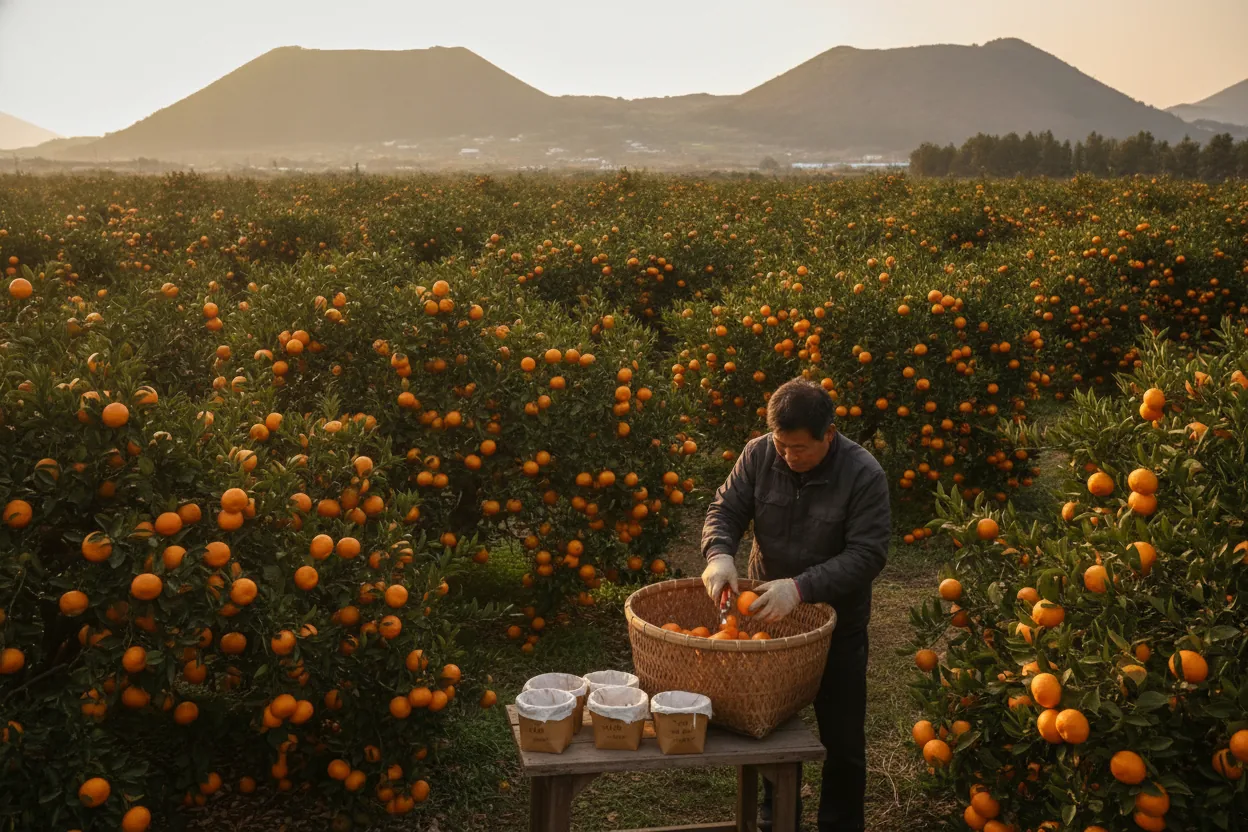
An unlimited eating pass at most Jeju tangerine farms runs around 11,000 won, and the fruit you clip yourself travels zero meters between branch and mouth. Tourists get sold this as a cute seasonal photo op, something to slot between a cafe stop and sunset shots. Locals treat it differently: it's a tourism economy their grandparents' farms are still learning to navigate. That gap shows up in something as basic as timing. There's no single tangerine season, no one calendar date to show up on, despite every farm marketing itself as currently at its peak. Figuring out when to go, which farm to trust, and whether the detour is even worth it on a tight itinerary means untangling what the brochures leave out.
Jeju grows nearly all of Korea's citrus, and tangerine farming has shaped the island economy for generations. The picking experience outsiders treat as a novelty is, for many local families, a business adapting in real time to a tourism economy that didn't exist when their grandparents planted the first trees. The farms worth visiting aren't the ones with the biggest parking lots or the most polished English signage. They're the ones where the price reflects actual fruit quality and the owner still walks the rows themselves. The rest comes down to three practical questions: when to go, what it actually costs, and which farm is worth the detour.
Is There Really One Best Time for Jeju Tangerine Season?
Jeju Tangerine Picking Season by Variety
Jeju Tangerine Picking Season by Variety
Early varieties are tarter and pickable mid September to October. Hallabong sweetens from late autumn into January. Late season fruit can stretch picking into February.
Source: Based on article estimates of typical Jeju farm harvest windows
Most visitors assume tangerine season in Jeju is a single window, something like cherry blossom season on the mainland, where you check a calendar app and show up on the predicted day. The reality on the ground looks nothing like that. Jeju grows several varieties that ripen at different points across autumn and winter, so what you pick in late September looks and tastes nothing like what comes off the same tree in December.
Early varieties, often loosely labeled early season mandarins, become pickable from around mid September through October. These tend to be tarter, smaller, and less sweet, which some visitors actually prefer. Hallabong, the big bumpy tangerine that's become something of a Jeju mascot, typically ripens from late autumn into winter. Many farms market peak Hallabong picking from November through January, depending on that year's weather. Late season varieties can stretch picking activity all the way to February at some orchards.
What this means practically: visiting Jeju in late September puts you at the early edge of the season, not the peak. The fruit will still be genuinely good, often sharper and more citrus forward than the sweeter winter Hallabong everyone photographs. Farms rarely advertise this distinction, because unlimited eating passes sell better when every month sounds like peak season. Travelers chasing the sweetest possible Hallabong should aim for November or later. Everyone else can visit anytime and eat well. That's the part the brochures leave out.
Does Tangerine Picking Cost More Than It Looks?
What a Jeju Tangerine Picking Visit Actually Costs
What a Jeju Tangerine Picking Visit Actually Costs
| Item | Typical Price | Notes |
|---|---|---|
| Adult unlimited eating | 5,000 to 10,000 won | Eat as much as you want on site |
| Child pricing | Lower than adult | Exact figure varies by farm |
| Take home extra fruit | +2,000 to 5,000 won | Optional bag charge |
| Parking near Seogwipo | Usually free | Most farms assume car arrival |
Source: Based on typical pricing ranges described in the article
Once the timing question is settled, the next one visitors ask is whether the experience is worth paying for at all. First time visitors often assume a picking experience must be expensive, bundled into a tour package with a markup attached. The reality is closer to a reasonably priced snack with a story attached. Prices at Jeju tangerine farms generally run between 5,000 and 10,000 won per adult for unlimited eating, with child pricing usually lower. Exact figures shift farm by farm, so treat any number well outside that range as worth double checking before you show up. Some farms add a small charge, often 2,000 to 5,000 won, if you want to take extra fruit home in a bag rather than just eating your fill on site.
That price gets you access to the orchard, guidance on which tangerines are actually ripe, and at the better run farms, a short explanation of the varieties in front of you. It doesn't typically include parking, though most farms near Seogwipo have free lots since they assume you arrived by car. According to some travelers' accounts, a KakaoTaxi from downtown Seogwipo to most farms in the area costs somewhat more depending on distance, though renting a car remains the more practical option for a day with multiple stops.
Compare that to what a decent tangerine costs at a Seoul supermarket or a convenience mart near Olive Young: often 1,000 to 2,000 won per piece for imported or premium citrus in winter. Eating five or six tangerines straight off the branch for around that same eating pass price starts to look reasonable rather than indulgent. The real value isn't the fruit. It's standing in an orchard with Hallasan visible in the distance, clipping fruit yourself, tasting the difference between a tangerine that traveled zero meters and one that traveled a truck route to a supermarket shelf. Anyone weighing the cost against a market stall bag is comparing the wrong two things.
Why Does One Seogwipo Farm Keep Coming Up in Every Conversation?
Unlimited Eating Pass: Tourist Price vs. Typical Range
Unlimited Eating Pass: Tourist Price vs. Typical Range
Advertised Tourist Pass
11,000 won
Typical Local Range
5,000 to 10,000 won
A price quoted well above 10,000 won per adult sits outside the normal range described for most farms, worth double checking before paying.
Source: Article comparison of quoted 11,000 won pass against typical 5,000 to 10,000 won range
Price explains whether picking is worth doing at all, but it doesn't explain why some farms get named specifically while others blur together. Visitors doing a quick search often assume most tangerine farms are more or less interchangeable: a patch of trees, a basket, a gate fee. Geumdongi Tangerine Farm in Seogwipo, located at 1994 Gangjeong dong, complicates that assumption in a way worth understanding before picking a farm at random from a map app.
This orchard has a documented history tied to tangerines once presented as tribute to Korean kings during the Joseon Dynasty. The specific plot is reportedly depicted on the Tamna Sunryeokdo, a historical map of Jeju from that era. Jeju families pass down this kind of agricultural memory about specific plots of land, since not every hillside on this island grew royal tribute fruit. Whether every visitor cares about that history is a separate question from whether it's real, and by local accounts, it is.
What travelers actually report from visiting is less about the history lesson and more about the owner explaining tangerine varieties and proper clipping technique directly, rather than handing over a basket and pointing at a gate. Many picking farms across Jeju have scaled up for tourist volume, which sometimes means less direct contact with the people who actually grow the fruit. A farm where the owner still walks the rows is a smaller, more personal experience, and that kind of access doesn't scale. Visitors who want the story along with the fruit gain something a bigger operation can't offer. Visitors chasing convenience alone won't notice the difference either way.
Should Every Jeju Visitor Actually Go Tangerine Picking?
Knowing when to go, what it costs, and which farm rewards the trip still leaves one question unanswered: whether picking belongs on a given itinerary at all. The tourist brochure version presents it as universally charming, something every visitor to Jeju should check off regardless of interest or itinerary. The math on a tight schedule tells a different story. A traveler doing a fast two day Jeju loop hitting Seongsan Ilchulbong, a couple of cafes, and a hike might find that an hour long detour to an orchard competes directly with time needed elsewhere. The fruit, while good, isn't different enough from a good tangerine at a Jeju market stall to justify the detour for everyone.
Where this genuinely pays off is for travelers with kids, for people already staying in Seogwipo or the southern part of the island, and for anyone who wants one activity in their trip that isn't a photo backdrop. Picking fruit yourself, learning the actual names and characteristics of varieties from someone who's grown them for years, standing in an orchard that predates modern Jeju tourism by centuries: that's a different category of experience than most of what gets marketed to visitors here.
Families traveling with children tend to get outsized value relative to the price. Kids generally respond well to the physical activity of clipping fruit and eating it immediately, and the eating pass price for an hour of entertainment plus snacks is a reasonable deal by any theme park comparison. Couples or solo travelers looking for something quieter than Myeongdong style tourist density also tend to report high satisfaction, mostly because an orchard visit forces a slower pace that the rest of a Jeju itinerary often doesn't allow.
The people who should probably skip it are travelers on a short layover style visit to Jeju, or anyone who's already done extensive fruit picking elsewhere and wants something more distinctly Jeju, like a Hallasan hike or a haenyeo diving demonstration. Tangerine picking is good, but it's not the only good thing on this island. So the tension from the start resolves this way: there's no single right day to visit and no farm that suits every traveler, but there is a right question to ask before booking anything, which is whether this trip has room for one deliberate stop rather than a box to check. If it does, the timing and the farm matter. If it doesn't, skip it without guilt.