What makes the number four unlucky in Korean gift-giving?
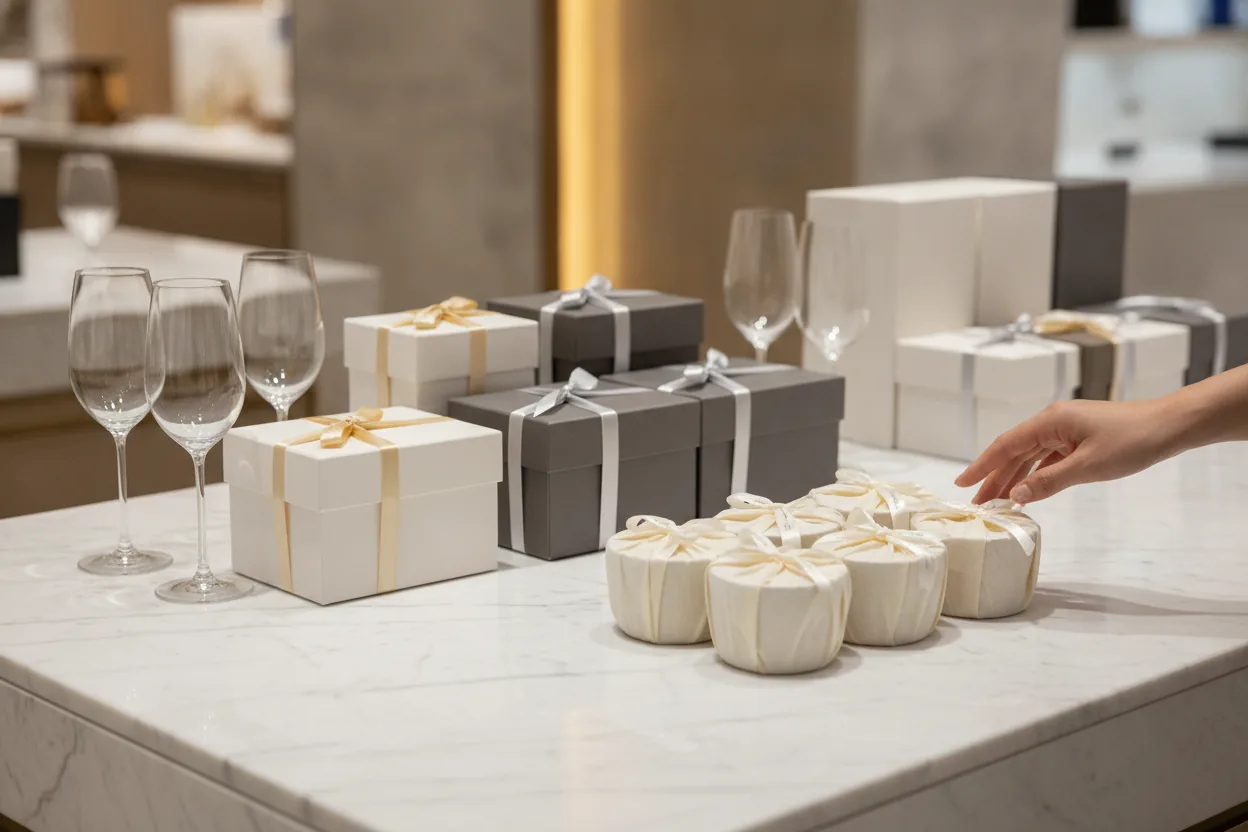
Most explanations of Korea's gift-giving taboos treat the number four like a vague old wives' tale. The real reason is startlingly literal: sa, the Korean word for four, is pronounced exactly like sa, the Sino-Korean word for death. Department stores have quietly rebuilt their packaging around that single fact, selling wine glasses and dessert boxes in threes, fives, and sixes instead of fours. A syllable rewrote retail defaults across Seoul. So how far does that superstition actually reach, and where does it stop mattering at all?
The practical result: Koreans commonly avoid giving items in groups of four. Four wine glasses, four candles, four handkerchiefs, four of anything gets passed over in favor of sets of three or five, both considered neutral or lucky. This isn't limited to gifts, either. Some Korean apartment buildings and hospitals skip labeling the fourth floor as "4," using "F" instead, the same way some Western buildings skip 13. You'll find the superstition in elevators, hospital wards, and license plates just as often as in wrapped presents.
Four sits inside a broader category of Korean gift taboos that visitors rarely get warned about. Sharp objects like knives and scissors are avoided because they symbolically cut a relationship. Shoes supposedly encourage the recipient to walk away from the giver. Umbrellas suggest separation. Mirrors carry bad luck in several Korean folk traditions. Writing a person's name in red ink is particularly loaded, since red name-writing has historically marked the deceased on funeral registers and ancestral tablets. None of this is enforced by law or some formal etiquette board. It persists through family habit, older relatives correcting younger ones, general cultural osmosis, and that's exactly why an outsider can miss it completely while still causing quiet discomfort.
So if four is this deeply embedded, from hospital floors to gift boxes, what does it actually look like when someone's standing in a Seoul department store trying to buy a present?
How does this rule actually change what people buy in Korea?
Retailers and gift-givers adjust real purchasing decisions around this taboo, and the adjustment is specific, not vague superstition-talk. Widely cited gift-giving guidance, including material attributed to The Soul of Seoul, notes that common gift sets like wine glasses, candles, or dessert boxes get packaged and sold in threes, fives, or sixes rather than fours, specifically to sidestep the death association. Picking out a boxed gift and the store default happens to be four units? Swapping to a three-piece or five-piece version is the standard workaround, and shop staff are generally used to the request.
Flowers follow a related but slightly different logic. They're broadly appropriate in Korea for occasions like new business openings, Parents' Day (where carnations specifically are traditional), romantic gestures, and as an addition to another gift. But two flower-specific rules stack on top of the general etiquette: never send flowers in bundles of four, and don't show up to a Korean housewarming with only flowers. Cleaning supplies like detergent or toilet paper are the culturally expected housewarming gift, symbolizing a clean start in the new home. A bouquet works fine as a supplement, not as the sole item. Given how specific the flower and housewarming rules get, what happens when foreigners start mixing them up with other, unrelated superstitions?
Do other Korean superstitions get confused with the number four taboo?
Yes, often enough that it's worth untangling. Green hats, for instance, get avoided as gifts because of an association with infidelity, a superstition tied to Chinese cultural influence around the phrase "wearing a green hat." It has nothing to do with numerology. Knife-gifting gets avoided for a completely separate reason: Korean folk belief holds that a gifted blade cuts the relationship between giver and receiver, bringing bad luck to both sides rather than just one. Foreigners often lump these together with the four-is-bad rule, but each superstition traces back to its own origin story rather than some shared root. Given how different these origins actually are, does every Korean person follow them the same way?
Does every generation in Korea take the number four rule this seriously?
No, and the generational gap is wide enough to change how the rule should actually get applied. Younger, urban Koreans in their 20s and 30s are, by most anecdotal accounts, considerably less strict about the number four than their grandparents' generation. Plenty would shrug off a set of four coffee mugs without a second thought. The deeper pattern, and the one that actually matters if you're giving a gift in Korea, is that these superstitions rarely disappear cleanly. They fade unevenly: staying strong in specific contexts like hospital floor numbering, funeral-related color choices, and formal gift sets for elders, while loosening in casual ones, like a birthday gift between friends. A useful rule of thumb: the more formal or elder-facing the occasion, the more the traditional taboos, four included, still apply. Among younger friends trading casual gifts, the rules bend considerably.
That gap answers the question the intro raised. The superstition reaches as far as formality and generation allow it to, strong in hospital wards and elder-facing gift sets, thin among friends trading birthday presents. Defaulting to three or five items rather than four costs nothing and removes any risk of an awkward moment, which is exactly why so many Korean retailers built that default into their packaging in the first place. For a visitor trying to decide how carefully to follow the rule, the real question isn't the number itself. It's whether the room is formal or casual, elder or peer.