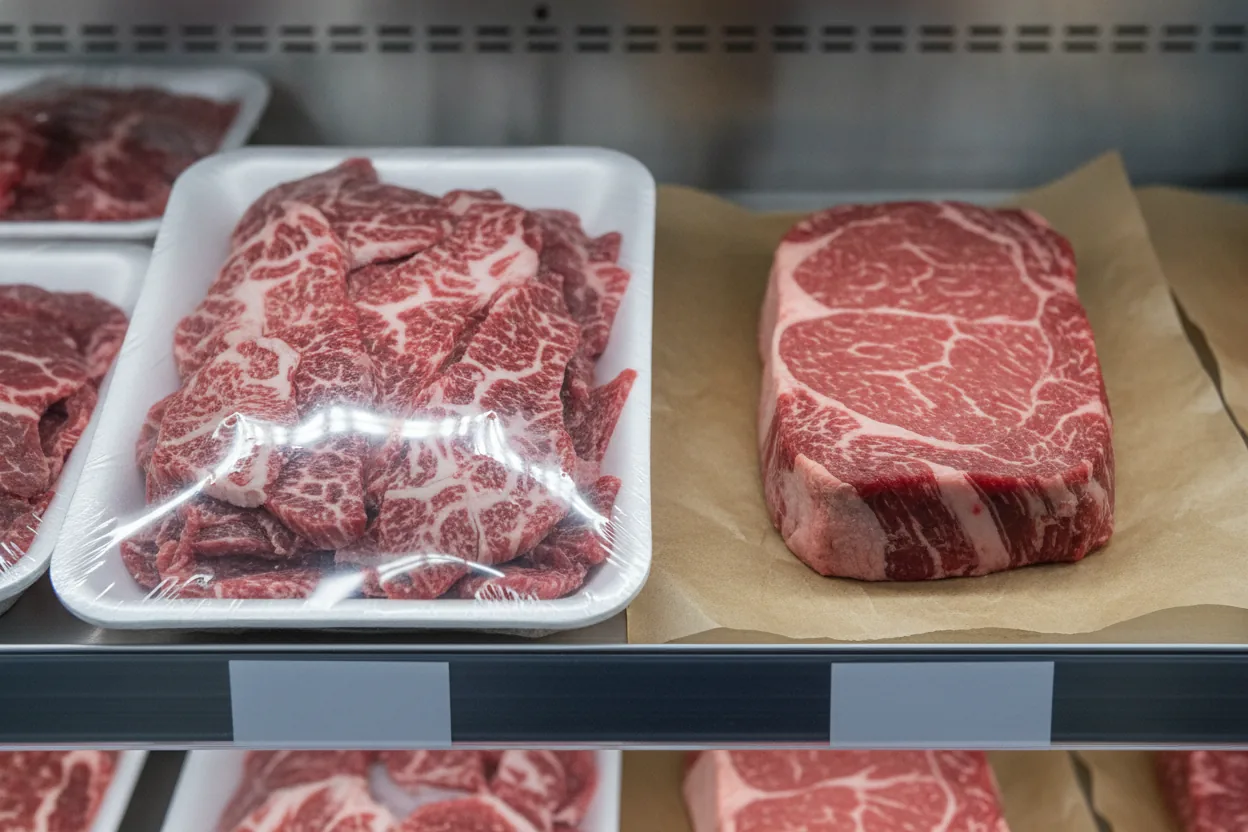
Estimates suggest a standard tray of precut bulgogi at any Homeplus or neighborhood grocer in Seoul runs somewhere around nine thousand won, and on the shelf it looks like the smart move. What nobody tells you is that same money increasingly buys gristle running through half the slices, while the twenty three thousand won kilogram of whole scotch fillet next to it, the cut most Korean home cooks actually reach for, sits there looking like the expensive option. The gap between those two prices has nothing to do with who has more won to spend. It's about who controls what lands in the pan.
Scotch fillet, the cut many Korean home cooks and food bloggers prefer for bulgogi, runs somewhere in the neighborhood of twenty three thousand won a kilogram when you buy it whole from a butcher counter in Seoul and slice it at home. Prices shift by shop and season, of course.
The gap between those two numbers isn't really about money. It's about who controls the quality of what ends up on the plate. The precut bag is convenience sold as a shortcut, but once quality drops, and by most home cooks' accounts it has been dropping, the shortcut stops paying for itself. So here's the real question: does the convenience of the bag still buy what it used to, or has the whole cut quietly become the smarter buy?
Why Does Precut Bulgogi Meat Keep Getting Worse?
Precut Bulgogi vs Whole Scotch Fillet: The Price Gap
|
Precut Bulgogi Pack (300g) ~9,000 won Quality unstandardized, gristle content rising |
Whole Scotch Fillet (per kg) 23,000 won Full control over freshness and cut consistency |
Eye fillet (beef tenderloin) for comparison: 30,000+ won per kg
Source: Source: Article estimates, Seoul retail prices
Precut bulgogi meat exists because slicing beef paper thin across the grain takes real effort, and Korean grocers figured out decades ago that a labeled bag marked bulgogi meat in the fridge or freezer section saves the customer that fifteen minutes. Fair enough, the convenience holds up. The problem is that the cut and quality behind that label are not standardized, so one grocer's bag might be scotch fillet trim and another's might be whatever was left on the bandsaw floor that day.
The quality of packaged bulgogi meat at neighborhood Korean grocers has been sliding, and this looks less like a conspiracy than a margin problem. Beef prices in Korea have climbed steadily in recent years, with imported beef and domestic hanwoo trim both getting pricier at the wholesale level. Input costs go up, but the shelf price of a 300 gram bulgogi pack stays stuck around 8,000 to 10,000 won, because that's the psychological ceiling shoppers accept. Something in the middle has to get squeezed. Usually it's the trim ratio: more connective tissue and gristle work their way into the pack to keep the fat and protein numbers looking right without raising the price.
Anyone who has bought a few packs from the same grocer over consecutive months in Seoul or Busan has likely noticed this. The meat looks fine through the plastic window, but once it hits the pan, there's more chew, more grey sinew, less of that clean marbled bite. Call this an observed pattern from repeat purchases rather than a verified industry statistic, but it lines up with what plenty of home cooks in Korea have started saying out loud over the past year.
So if the packaged option is quietly declining, where does that leave someone who still wants real bulgogi without spending an afternoon at a butcher counter?
Is Buying Whole Scotch Fillet Actually Worth the Extra Effort?
Beef Cut Comparison for Bulgogi
| Cut | Price | Control Over Quality | Marbling |
|---|---|---|---|
| Precut Bulgogi Pack | ~9,000 won / 300g | Low, grocer decides | Inconsistent |
| Whole Scotch Fillet | 23,000 won / kg | High, home cook decides | High, juicy on pan |
| Eye Fillet (Tenderloin) | 30,000+ won / kg | High | Leaner, less marbled |
Source: Source: Article estimates, Seoul and Busan retail observations
Buying a whole piece of scotch fillet and slicing it at home costs more upfront, but it hands back full control over two things precut meat never guarantees: freshness and cut consistency. Scotch fillet, sold as rib eye in the US, carries enough marbling to stay juicy on a hot pan or grill, which is exactly why it beats leaner cuts like top round or brisket for bulgogi. It also costs noticeably less than eye fillet, known as beef tenderloin, which can run well above 30,000 won per kilogram at Korean butchers and department store meat counters like the ones in Lotte Mart or Homeplus.
Technique matters as much as the cut itself. Semi freezing the meat for about thirty to forty five minutes before slicing firms it up just enough to cut clean, even slices two to three millimeters thick, roughly an eighth of an inch, without the meat sliding around under the knife. Slice across the grain, not with it. That one detail keeps bulgogi from turning stringy no matter how good the cut was to begin with, and it's the thing that separates restaurant texture bulgogi from the chewy version a lot of home cooks end up with.
There's also the tenderizing step, which most people skip or misunderstand. Grated pear or apple in the marinade isn't just for sweetness. It works as an enzymatic tenderizer, breaking down some of the muscle fiber the same way a commercial meat tenderizer would, except it also adds a rounded sweetness that balances the soy and garlic. A medium Korean pear costs a few thousand won at convenience stores like GS25 or CU when bought individually, though buying from a traditional market or grocer in bulk tends to bring the per unit cost down noticeably. Set that against a 9,000 won bag of gristly precut meat and the math on quality per won starts to shift.
None of this erases the tradeoffs. Slicing a full scotch fillet at home takes a sharp knife, a stretch of counter space, and roughly fifteen to twenty minutes of actual labor, which is exactly the time cost precut meat is designed to remove. Really, it comes down to frequency: how often someone is actually making bulgogi decides which side of the math wins.
Who Should Actually Buy Which Cut?
From Whole Cut to Bulgogi Slices: The Home Prep Process
Source: Source: Article technique description
The honest answer depends less on taste and more on frequency. Most advice aimed at foreigners living in or visiting Korea gets this backward by treating bulgogi meat as a single decision rather than a recurring one. Someone making bulgogi once a month for a dinner party faces very different math than someone eating it twice a week as a staple, and Seoul's grocery landscape is built to serve both without clearly telling shoppers which one they are.
For occasional cooks, the precut bag from a Korean grocer still works fine most of the time, especially from grocers with faster turnover, since the gristle problem tends to track how long a batch has been sitting in the case rather than the brand itself. Checking the packing date, which Korean food labeling law requires to appear somewhere on the tray, is the closest thing to a quality guarantee available at that price point. A pack dated within two to three days of purchase is a reasonably safe bet.
For regular cooks, the math tilts hard toward the whole cut. A one kilogram scotch fillet at roughly 23,000 won yields about three to four bulgogi meals depending on how much beef per serving a household uses, which lands the per meal cost somewhere between 5,750 and 7,667 won for the meat alone, often cheaper than the equivalent volume in precut packs once the trim waste in a bad batch gets factored in. There's a second advantage that rarely gets mentioned: buying whole cuts means the same butcher relationship can serve other Korean dishes, japchae, bibimbap toppings, or galbi, so the knife skill investment pays off repeatedly rather than being a one dish trick.
What settles the question from the start isn't the cut at all. It's which grocer or butcher counter someone trusts enough to buy from consistently, and that trust gets built the same way it does everywhere else in Korea: through repeat visits and paying attention to what changes. Once that trust exists, the nine thousand won bag and the twenty three thousand won kilogram stop being rivals and just become two tools for two different weeks.