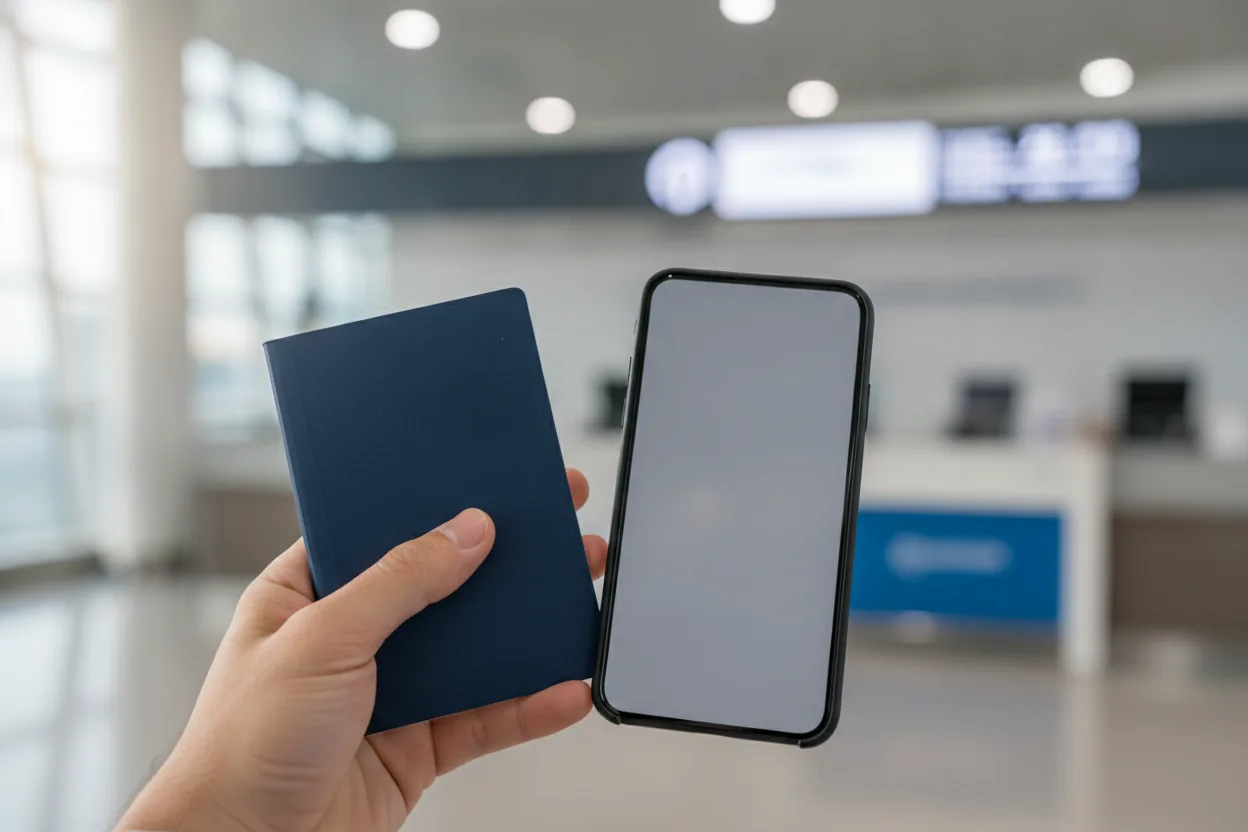
Explaining why the ARC blocks phone activation
An eSIM bought at Incheon with just a passport gets you data the moment you land. What it won't do is receive the SMS code your Korean bank or delivery app needs to work. So how does a new arrival get from that data-only eSIM to a fully working Korean phone number, and eventually to a cheap MVNO plan running 50 to 70 percent less than what they started with? That gap between a real number and data-only access is why most new arrivals end up walking through a specific three-stage path before they ever qualify for the discounted plan.
The problem is a familiar one to anyone who's landed here recently: new employees, students, and spouses arrive needing a working number for job onboarding, apartment hunting, or delivery apps, but Korea's telecom system is built around ARC verification. The mobile market runs almost entirely on real-name registration, tied to ID checks that shut out foreigners without local paperwork.
The workaround splits into two categories: data-only eSIMs that skip ARC entirely but can't receive Korean text messages, and physical prepaid SIMs bought at the airport, which assign an actual Korean phone number using just a passport. That distinction between data-only and a real 010 number decides which daily tasks you can actually pull off in week one, since most Korean banking apps and delivery platforms demand SMS verification to a 010 number.
Mapping the three-stage path carriers and MVNOs use
That data-only versus real-number split plays out as a three-stage process. Incheon Airport's arrival hall has counters for prepaid SIM and eSIM providers, and this is Stage 1 of a sequence most long-term foreign residents in Korea move through without ever realizing it's a system at all.
- Stage 1 (Day 1, no ARC needed): Buy an airport prepaid SIM or activate an eSIM using only a passport. eSIM providers like Airalo, Holafly, and Klook offer data-only access, with pricing that ranges from budget to moderate depending on the plan, but they hand you no Korean phone number and can't receive one-time password (OTP) texts. A physical prepaid SIM from an airport kiosk gets you a real Korean number instead, which matters if you need SMS verification right away.
- Stage 2 (roughly week 2 to 4, after ARC arrives): Visit a Big 3 carrier store or an authorized dealer with your ARC, passport, and Korean bank account details in hand. Ask staff to switch you to a postpaid plan (후불요금제) while keeping your existing number through 번호이동 (number transfer) or 번호유지 (number retention). The in-store process usually takes well under an hour, and it immediately unlocks full banking OTP access and PASS app registration, the digital ID app used across Korean government and finance services.
- Stage 3 (optional, once settled): Switch to an MVNO, known locally as 알뜰폰 (literally "frugal phone"), which runs on the same physical networks as the Big 3 but charges noticeably less per month. You still need an ARC and a Korean bank account for this, and number portability means you keep your 010 number in the switch.
The whole sequence, from passport-only airport SIM to a discounted MVNO plan, can take anywhere from a few weeks to a couple months, largely depending on how fast the immigration office processes the ARC application.
Matching the right tool to each stage
Knowing the three stages is one thing. Picking the right device and SIM type for Stage 1 is another. A Galaxy S20 or an iPhone XS and later can run an eSIM, and that matters because Stage 1 depends entirely on device compatibility: phones from before 2018 or so simply won't support eSIM. Anyone arriving with an older unlocked phone should just go straight for a physical prepaid SIM, available at the same airport kiosks.
The eSIM route solves data access, maps, ride apps, and messaging over Wi-Fi-based platforms like KakaoTalk. It does not solve the OTP problem. Korean banks, delivery apps like Baemin and Coupang Eats, and most government portals send verification codes to a real 010 number, something a data-only eSIM simply cannot receive. This is the specific gap that pushes most newcomers into the physical SIM or the Stage 2 postpaid upgrade within days of landing.
For comparison, the mechanics resemble setting up a US phone number: choose a provider, verify identity, activate calling and texting. But Korea's real-name registration law adds a stricter checkpoint. A US SIM from a Walmart kiosk or a VoIP app rarely demands government ID upfront the way Korean postpaid activation does with the ARC. That difference is exactly why Korea routes foreigners through prepaid or eSIM options first instead of allowing an immediate postpaid signup, the way US retail typically works.
Once the ARC is issued, the Stage 2 store visit is straightforward: bring the ARC, passport, and Korean bank account, and expect the paperwork to move fast.
Weighing the real savings and hidden requirement of switching to MVNO
With Stage 1 and Stage 2 covering data access and a working 010 number, the real question left is when Stage 3 actually pays off. A postpaid plan from SK Telecom or KT typically costs a moderate amount per month depending on data allowance, and that price tag is usually what pushes settled foreign residents toward Stage 3. Korean MVNOs, the 알뜰폰 providers, resell capacity on the same Big 3 towers but cut monthly costs substantially, so a typical postpaid plan often turns into a notably cheaper MVNO plan with comparable data and call minutes.
The catch: MVNO signup still requires both an ARC and an active Korean bank account, the same two documents Stage 2 needed. There's no skipping straight from an airport eSIM to a discounted MVNO plan. The entire discount structure assumes you've already cleared Korea's real-name registration requirements. Number portability does work here, though, so switching from a Big 3 postpaid plan to an MVNO keeps the same 010 number you've already handed to your bank, employer, and every delivery app on your phone.
The smart move for newcomers comes down to timing: sign up for a Big 3 postpaid contract the moment the ARC arrives, so you get full OTP and PASS app functionality right away, then switch to an MVNO a few months later once your routines settle in, to grab the lower monthly cost. Data-only eSIM on day one, postpaid Big 3 plan once the ARC clears, MVNO once things settle: that's the specific path that turns a passport-only arrival into a resident with a working number and the cheapest plan available for it.