What makes Dongdaemun different from a normal shopping district?
Two shoppers can buy the exact same jacket in Dongdaemun and walk away having paid wildly different prices, and neither one haggled particularly badly. The gap comes down to which building they stood in, what time they showed up, and whether they had cash on them.
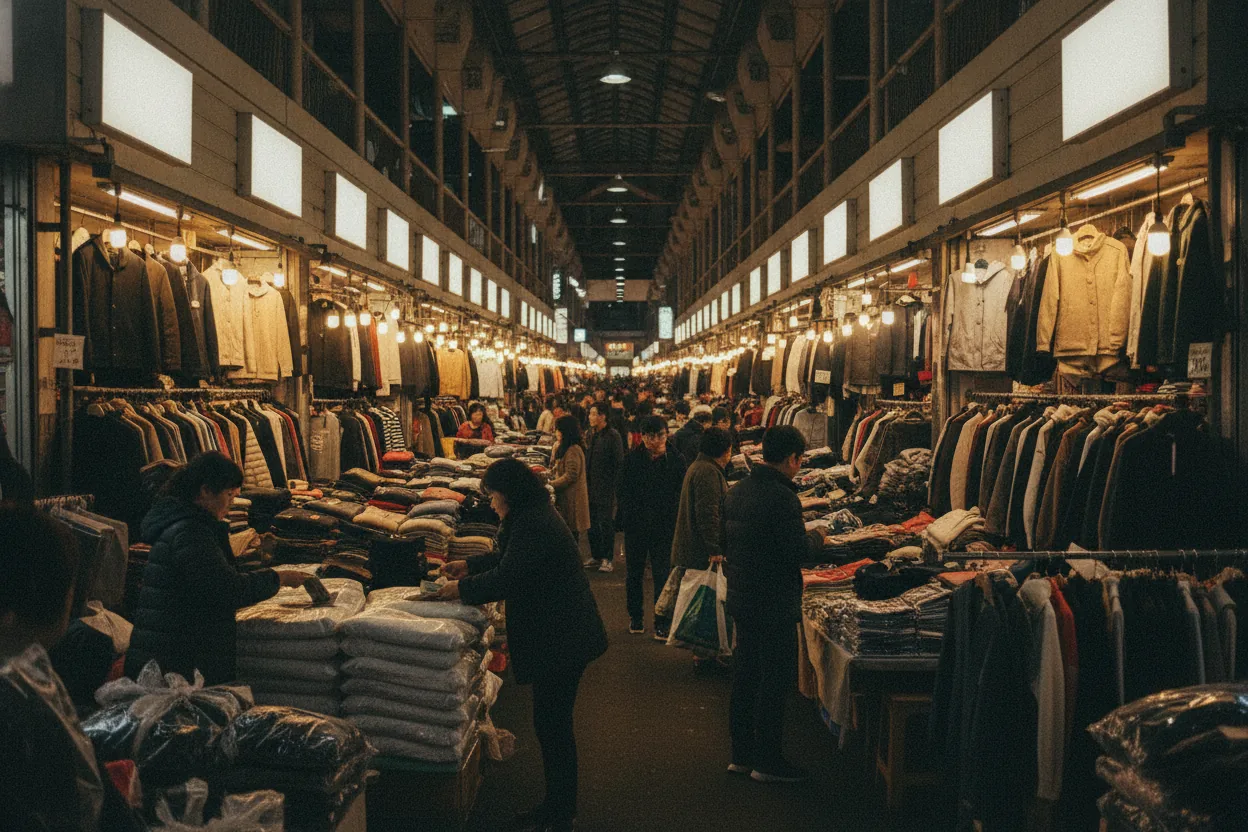
Dongdaemun Market sits in eastern central Seoul, anchored by Dongdaemun History and Culture Park Station on subway Lines 2, 4, and 5. It's not one building but a sprawling cluster of malls, alleyways, and stalls, and it really splits into two different worlds: the retail malls and the wholesale buildings. On the wholesale side, some buildings don't even open until evening and stay busy past midnight, cash is king, and haggling isn't just tolerated, it's expected. The Shoes Market runs on its own logic too, generally daytime hours with extended evening hours on certain weekdays, a schedule odd enough to throw off anyone expecting a normal storefront.
Product range covers accessories (earrings from 2,000 to 10,000 won, necklaces from 5,000 to 20,000 won, bags from 15,000 to 50,000 won, scarves from 5,000 to 15,000 won, hats from 10,000 to 25,000 won), footwear starting as low as 10,000 won for a decent pair, and whole buildings given over to fabric and sewing supplies for tailors and designers. Gwangjang Market sits nearby too, adding another layer of textile shopping for anyone who wants it. Once you know which side of Dongdaemun you're standing in, and which hours it actually runs on, the real question becomes what that split does to your wallet.
How much do you actually save, and what do you need to know before you go?
A shopper paying cash at Migliore after 10 pm and a shopper paying by card at Doota at 2 pm are, functionally, buying in two different markets. Wholesale-side shopping at Dongdaemun runs noticeably cheaper than similar items in Myeongdong, Seoul's other big shopping district, though exact savings shift from shop to shop. That gap is the difference between a fixed retail markup and a price close to what the shop owner actually pays the manufacturer. The discount hinges on three things: which building you're in, what time you show up, and whether you're handing over cash, the same three factors splitting the retail and wholesale sides in the first place.
Cash is the biggest lever by far. Vendors in wholesale buildings and market stalls, Migliore, Hello apM, the Shoes Market included, will often shave a bit more off the price for cash on top of whatever you've already talked them down to. Doota and the bigger retail malls take cards without any fuss, but don't bother trying to bargain there. Seasoned shoppers bring a real stack of cash for exactly this reason, since tapping a card at the register can quietly erase the discount you just spent five minutes negotiating. Cash sets the floor. Timing decides how low you go from there.
At 9 pm, when the night market first fills up, prices sit close to full wholesale rate. By midnight, vendors start cutting prices to move stock before closing. Buy early in the evening and you're paying more than the shopper who waited. Show up mid-afternoon expecting deep wholesale pricing, though, and you'll be disappointed too: the retail side isn't dramatically cheaper than an afternoon in Myeongdong, so the real savings live specifically in the wholesale buildings, late at night. Even with cash in hand and good timing, a few practical details still decide what you actually pay.
- Sizing: Korean sizing runs small, and a "free size" label usually means Western XS-S. Try things on before buying, more so here than at a normal retail store, because returns generally don't exist.
- Tourist access: Not every wholesale shop wants to deal with a single-item tourist purchase. Some sellers are focused entirely on bulk buyers restocking their own stores, and if one seems busy with a wholesale client, that's not a snub, just walk to the next stall.
- Fatigue: The market is big enough that exhaustion becomes a real cost. Dongdaemun Design Plaza (DDP) gives you somewhere to sit, and a coffee break nearby keeps your bargaining energy up for the next round instead of you caving and taking the first price out of sheer tiredness.
- Holiday hours: Most of Dongdaemun stays open on public holidays, though some shops close for Lunar New Year and Chuseok.
Over at Namdaemun Market, a bowl of galchi-jorim, spicy braised hairtail, runs a modest price per person in the dedicated alley near Hoehyeon Station, by most visitor accounts. Worth keeping in mind as a rough benchmark for food costs during a full shopping day, since Dongdaemun itself isn't really a dining destination and those small meal costs add up fast.
Time a wholesale visit for late evening, bring cash, and know which building to walk into, and you'll pay noticeably less than the fixed-price retail rack charges for the same item, according to frequent shoppers. Wander in at 3 pm with just a card and no plan, and you'll land somewhere close to Myeongdong pricing anyway. Both shoppers walked into the same market and left with the same jacket. What separated their receipts was never luck, it was the building, the hour, and the cash sitting in their pocket.