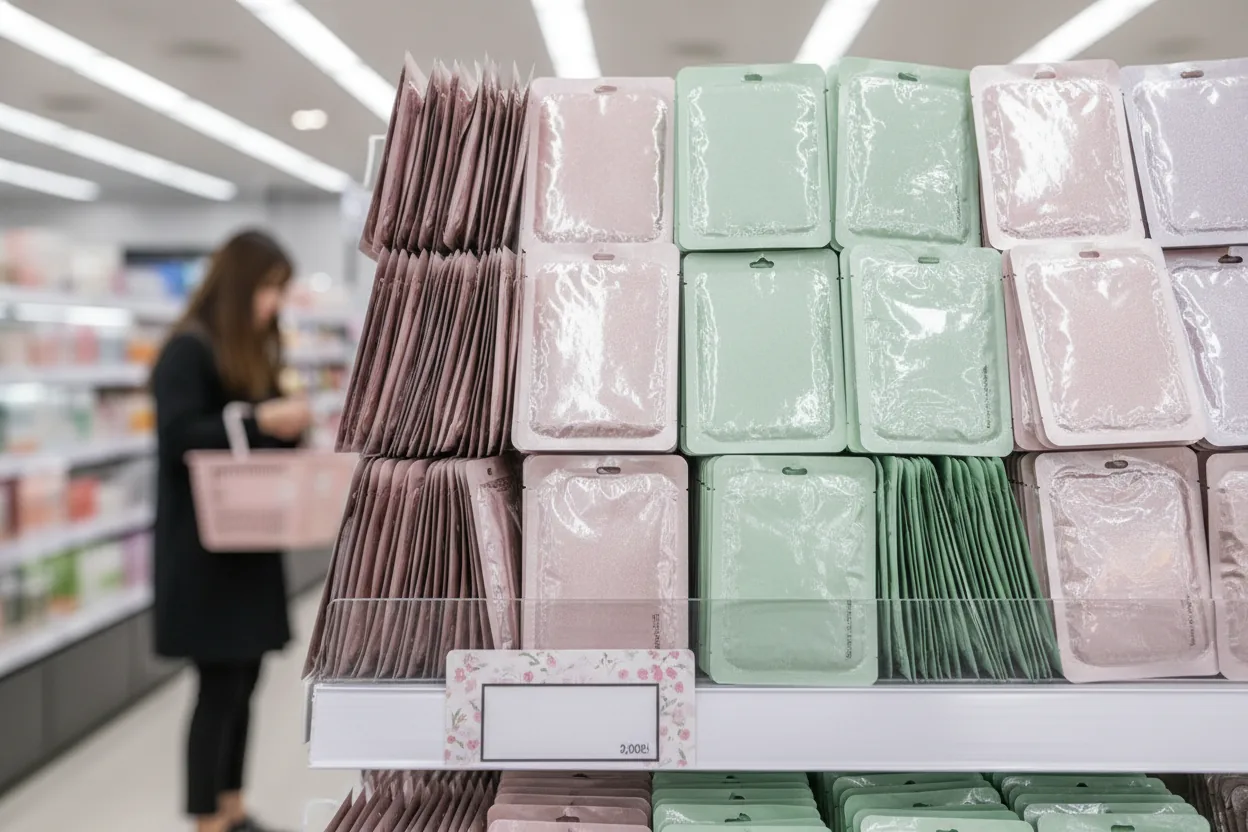
Nineteen dollars on an American retail site. Eight to twelve thousand won at an Olive Young in Myeongdong, often less during a promotion, for the exact same sheet mask. Tourists see a markup and call it price gouging. Locals just see a shipping and distribution cost they never bother paying, because they know the sale calendar. So what actually explains the gap between the sticker price abroad and what Koreans pay on the ground? And why does almost no English language roundup get it right?
Korean face masks really are engineered differently than most Western equivalents, built around fast absorption and layered actives rather than a single hero ingredient. That part of the hype holds up fine. What doesn't hold up is the price framing in most roundups, written by people who will never set foot in a Korean drugstore. The products earn the attention. The prices only make sense once you know where and how Koreans actually buy them.
What Olive Young Prices Actually Mean on the Ground
Overseas Sticker Price vs Korean Domestic Price
| Product | Overseas Price | Korea Price | Sale Price (Korea) |
|---|---|---|---|
| Biodance Bio Collagen (4 pack) | $19 | Lower | ~50% off (BOGO) |
| Knours PDRN Peel Off Mask | $24 | 15,000 to 20,000 won | Plus app coupon |
| Some By Mi Sherbet Wash Off Mask | $18 | Mid range domestic | Weekly staple item |
| Menokin Collagen Bubble Mask | ~$30 | Lower domestic | Treated as novelty abroad |
| Sulwhasoo Overnight Mask (50ml) | ~$50 | Comparable price | Minus VAT refund |
Source: Based on figures cited in article, converted estimates
Take the Biodance Bio Collagen Real Deep Mask, which widely cited figures put at around 19 dollars for a 4 pack in most English language roundups. In an Olive Young store, a 4 pack runs somewhat lower, closer to a more modest dollar figure once you convert at typical exchange rates. During one of Olive Young's regular sale weeks, that same box drops with a buy one get one deal that cuts the per mask cost roughly in half. Locals rarely buy Biodance at full price. They know the sale calendar, so they wait for it.
The Sulwhasoo Overnight Vitalizing Mask is the outlier here. Some sources cite a price point in the fifty dollar range, and that number actually holds up in Korea too, since Sulwhasoo is a prestige line sold at department store counters in Shinsegae or Lotte, not at drugstore chains like Olive Young. A 50ml jar's won price varies by counter and current promotion, but it lands close to the US price once a tourist factors in the VAT refund available at Incheon Airport. This is one of the few items on any K beauty list where the sticker price abroad isn't a wild exaggeration.
Peel off masks like the Knours PDRN Rice and Green Tea version, priced at 24 dollars overseas, tend to sit in the 15,000 to 20,000 won bracket domestically, before anyone even applies an Olive Young app coupon. The app matters more than people expect. Olive Young runs a membership tier system, and members get access to flash discounts that stay completely invisible to anyone browsing the shelf without the app open.
Export prices aren't dishonest, exactly. They represent a different retail ecosystem entirely, one without the sales cadence, membership stacking, and counter loyalty points that shape how Koreans actually pay for the same box. That difference, not the sticker itself, is what most roundups miss. It's the real gap between how outsiders shop and how locals shop.
Why Wash Off and Bubble Masks Get Explained So Poorly
Why Sulwhasoo Is the Pricing Outlier
Source: Based on article description of Sulwhasoo distribution model
That gap in sheet mask pricing is easy to spot once you know the sale calendar and the app coupons. It gets a lot harder to see in categories that barely register on English language lists at all: wash off and bubble masks. Which is exactly why the explanations for them tend to be so thin.
The Some By Mi PDRN Spirulina Soothing Sherbet Mask, tagged as best wash off overall at around 18 dollars according to some listings, is a strong example of a category that reads as niche abroad and lands as completely mainstream in Korea. Wash off clay and gel masks function as a weekly habit item here, not a treat, and they sit in the mid range of Olive Young's wall in domestic pricing. Koreans buying this one aren't chasing a trend. They're restocking something they use every Sunday.
Bubble masks are the more interesting case. The Menokin Collagen Bubble Mask, said to run in the low thirty dollar range overseas, occupies a category that still gets treated as a novelty in Western coverage, largely because the foaming reaction photographs well for content. In practice, bubble masks sell steadily but modestly in Korea, at generally more moderate domestic prices, and the appeal has less to do with the fizz than with the belief that the foaming action helps lift out pore residue before a sheet mask session. Dermatologists in Korea genuinely debate whether that mechanism differs meaningfully from a standard clay mask. Olive Young staff will say as much too, if a shopper actually asks instead of just grabbing whatever's trending on the shelf display.
What locals actually do differs from the single mask ritual most articles imply. A typical Friday night routine layers a wash off or bubble mask first, then a sheet mask for ten minutes, sometimes finishing with an overnight mask instead of a regular moisturizer. That sequencing, not any individual product, rarely makes it into English language coverage, and it changes how much a person spends per month far more than any single sheet mask price does. Outsiders buy a product. Locals build a routine, and that routine is the actual price tag worth tracking.
Sensitive Skin Claims and the Ingredient Literacy Gap
What Makes Up the Overseas Sticker Price
Source: Conceptual breakdown based on article's explanation of the price gap
That routine also depends on trusting what's actually in each layer, especially for reactive skin. Which is where the sensitive skin claims printed on these boxes start to matter more than their price tags.
The Sungboon Editor Deep Collagen Power Boosting Mask, marketed for sensitive skin at 19 dollars for a 4 pack, points to something Charlotte Cho and other K beauty voices have said for years: Korean formulation culture treats sensitive skin labeling seriously because the domestic market demands it, not because it works as a marketing angle. Olive Young's own shelf tags often list irritant free claims tested against Korea's Ministry of Food and Drug Safety standards, a regulatory detail most shoppers abroad never even see.
Ingredient names like PDRN, which shows up in both the Some By Mi and Knours products on this list, have become a real literacy marker in Seoul. Ask a beauty counter worker in Seongsu dong what PDRN does and expect a real answer about salmon derived DNA fragments and tissue repair signaling, not a shrug. That level of staff knowledge isn't universal across every Olive Young location, but it shows up far more often than most first time visitors expect, especially at flagship stores versus small neighborhood branches.
None of this means every sensitive skin claim on a Korean mask box amounts to airtight science. The shift toward advanced materials, from bio cellulose to bamboo fiber sheets, is real, but material innovation and suitability for reactive skin are two different claims, and Korean packaging sometimes blurs them the same way packaging does everywhere else.
The insider move, then, isn't memorizing ingredient names or hunting for the lowest possible won price. It's knowing that Korean regulatory labeling gives a more reliable signal than the same product's marketing copy abroad, and that the real cost of any of these masks only makes sense once you buy it the way locals do: on the app, during a sale week, as part of a routine rather than a one off purchase. That combination, not the sticker price in either currency, is the actual gap between a tourist purchase and a local one.