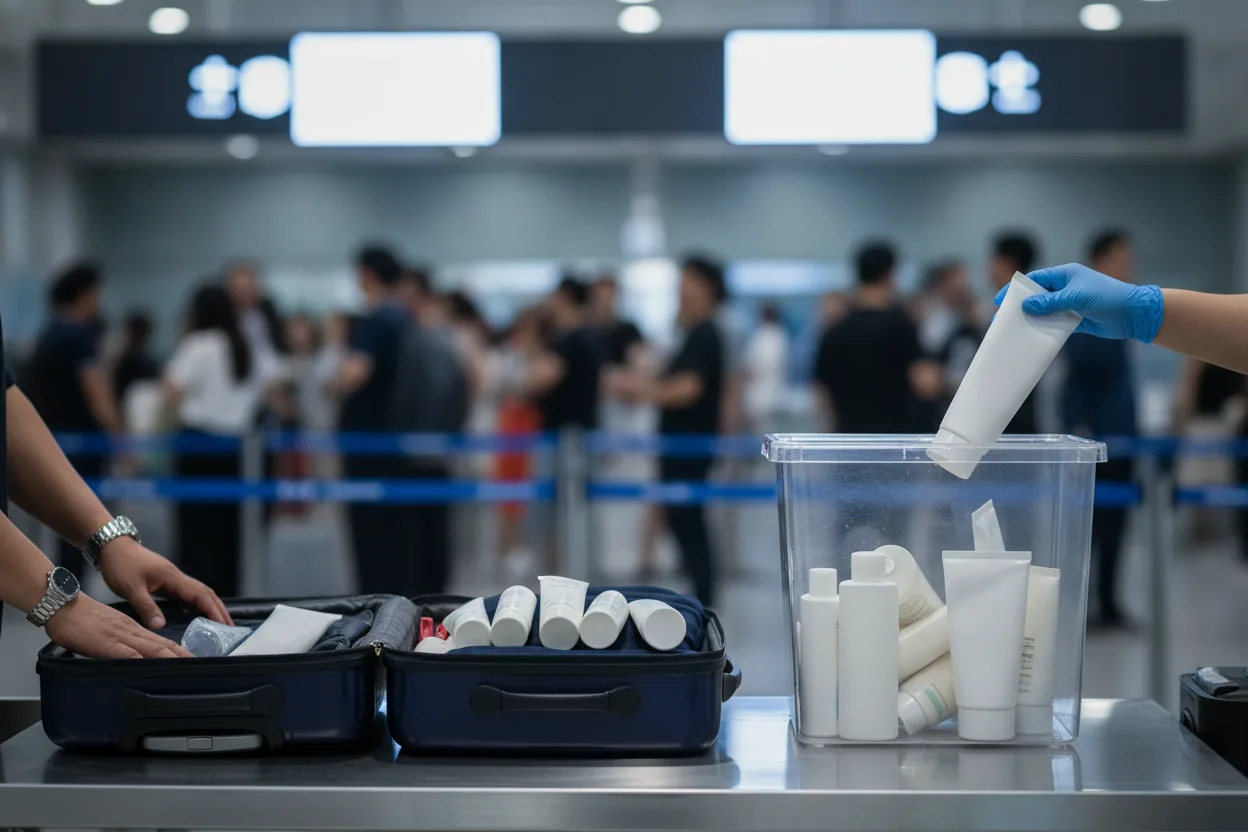
A 300ml tube of UNOVE hair treatment, one of the most requested items in Olive Young, gets pulled at security the moment you try to carry it home in a cabin bag. Locals walk right past it because they already know the rule: 100ml per container, no exceptions, doesn't matter how good the reviews are. Tourists find this out standing at the Incheon gate, watching a $20 purchase drop into the confiscation bin while the sunscreen next to it sails through untouched. The real question isn't what to buy at Olive Young. It's which of the things you bought will actually make it onto the plane.
Why the 100ml Rule Decides What You Should Buy
Which Olive Young Products Survive Cabin Baggage Rules
| Product | Typical Size | Cabin Status |
|---|---|---|
| UNOVE Hair Treatment | 300ml | Confiscated |
| Sunscreen | 50 to 80ml | Clears Security |
| Toner | 50 to 80ml | Clears Security |
| Serum (travel size) | 30ml | Clears Security |
| Serum (full size) | 150ml | Confiscated |
Ramen, gim, and yakgwa are dried or solid goods, so they bypass the liquids rule entirely.
Source: Based on article details, Korea Shopping Guide 2026
That gap between what clears security and what gets confiscated isn't random. It follows a rule almost nobody reads before they shop: 100ml per container for cabin baggage, full stop, no exceptions for how good the product is. Korean skincare comes in a strange mix of formats, and the size on the shelf usually has nothing to do with what airport security allows. Sunscreens and toners tend to run 50ml to 80ml, safely under the cabin limit. Serums are more of a gamble. Some brands sell 30ml travel sizes specifically because they know foreign buyers are flying home with them. Others only stock the full 150ml bottle meant for a Korean bathroom shelf.
The UNOVE hair treatment is a useful case study. It's one of the more requested items among visitors who've done their research, and it comes in a 300ml tube. Great deal per milliliter if you're staying in Korea. Checked luggage item the moment you're not. Nobody at the register mentions this, because the register isn't where the problem shows up. The problem shows up at the X ray belt three days later.
Yakgwa, gim, and packaged ramen sidestep the whole issue because they're solid or dried goods. They pack flat, they don't trigger the liquids rule, and most destination countries clear them through customs without drama. If you're bringing meat floss or fresh kimchi into a country with strict agricultural import rules, check ahead first, that's a separate category from dried snacks. A multi pack of Buldak ramen at GS25 or a supermarket, pricing varies by store and promotion, isn't going to get stopped anywhere.
Buy the liquid you actually plan to use before you leave Korea. Treat anything in a bottle over 100ml as a checked bag decision made at the shelf, not at the airport. Locals shop this way by instinct. Tourists learn it by losing a $20 tube at the gate. That instinct gap is the entire difference between a smooth exit and a bin full of skincare at security. Knowing what survives the flight is only half the equation, though. The other half is what you paid for it in the first place.
Olive Young Runs Two Different Price Systems
The Tax Free Discount Path at Olive Young
Source: Based on article details, Korea Shopping Guide 2026
Olive Young dominates Korean beauty retail so thoroughly that comparing prices across its stores is almost pointless. What actually matters is comparing the Olive Young app price against the in store price, because they're frequently not the same number. The app runs flash sales, member only coupons, and bundle deals that the walk in customer standing at the counter in Myeongdong simply doesn't see, unless someone told them to check first.
Tax free shopping adds another layer. Foreign passport holders spending over a minimum threshold, commonly cited around 15,000 won but worth confirming at checkout since these thresholds shift, can get an immediate discount rather than waiting for an airport refund, provided they show a physical passport at the register. A photo of a passport on a phone doesn't count in most locations. This single detail, carrying the actual passport, is the difference between an 8 to 10 percent discount applied on the spot and a chase through the airport refund kiosk with fifteen minutes before boarding.
Membership tiers inside the app have shifted the incentive structure toward frequent, smaller purchases rather than one large haul. That rewards residents more than tourists, which tells you something about who the app is actually built for now.
The store shelf is the retail version of a list price. The app and the passport are where the real price lives. Skip them and you end up paying more than the person standing next to you at the same register, and you'll probably never even realize it happened. Getting the price right matters less, though, if the item itself was never going to survive the trip home in the first place.
Which Souvenirs Actually Survive the Trip Home
App Price vs In Store Price at Olive Young
|
Olive Young App Lower Price Flash sales, member coupons, bundle deals |
Walk In Counter Full Price No visibility into app only deals |
Source: Based on article details, Korea Shopping Guide 2026
Ask ten travelers what they regret buying in Korea and at least three will mention something that leaked, melted, or got left behind because it didn't fit the bag. This isn't a Korea specific problem, but Korean shopping culture, with its generous multi packs and bottle heavy skincare lines, makes it easy to overbuy exactly the wrong shape of item.
Dried and packaged goods are the quiet winners. Yakgwa keeps well, weighs little, and reads as a thoughtful gift rather than a generic souvenir. Gim, sold in multi packs at almost any supermarket or GS25, prices vary by brand and pack size, is flat enough to slide into the gap between folded clothes without restructuring a suitcase. Instant ramen in the Buldak or Shin Ramyun family checks the same boxes: light, flat, cheap relative to its weight in luggage space.
Compare that to a haul of full size serums, essences, and the UNOVE treatment tube, and the math changes fast. Liquids are heavier, more restricted, and more likely to be the item left behind in a hotel bathroom because there was no room after the checked bag got packed.
None of this means skip the skincare. Sort your shopping bag by physics before you sort it by brand. The item that survives customs and baggage handling is worth more than the one confiscated at the gate, no matter how good the reviews were. Put the rule, the pricing, and the packing logic together, and the whole shopping trip collapses into one short checklist.
The Real Insider Knowledge Fits in One Checklist
A few minutes with the Olive Young app, a passport that stays in your actual bag rather than your camera roll, and a rough mental map of which items are liquid versus solid: that covers most of what separates a smooth trip from an airport scramble. Add a KakaoTaxi ride to a supermarket in Mangwon or Seongsu dong for the dried snacks, and the whole shopping run gets simpler, not more complicated.
The $20 tube in the confiscation bin was never really about the tube. It was about shopping without knowing the one rule that decides what makes it home. Check the app, carry the passport, sort by liquid versus solid, and the bottle that was a gate problem for someone else just becomes another thing you packed correctly.