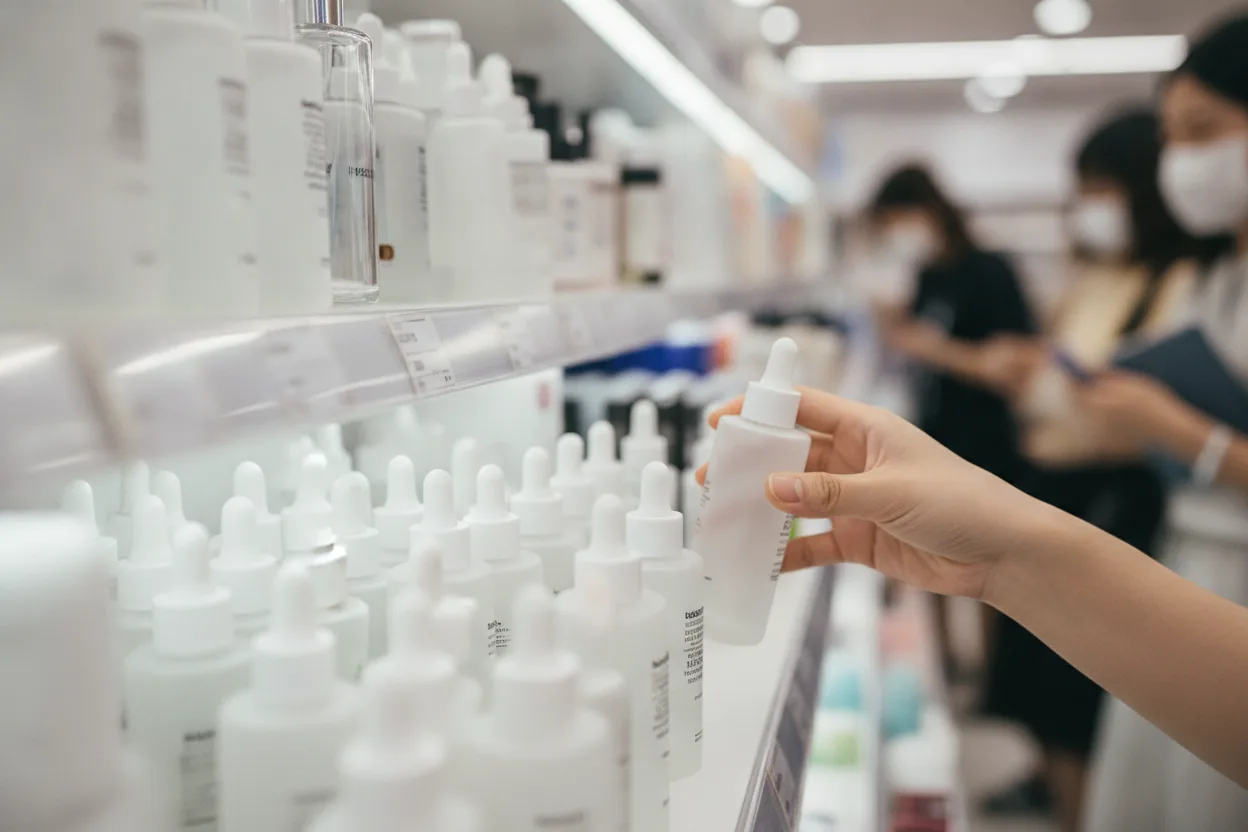
A bottle of scalp scaling toner at a Seongsu-dong drugstore costs about what you'd expect to pay for an everyday drugstore item, a price so ordinary that locals never think to mention it. A global trend report just called scalp scalers one of the five hair care movements defining 2026, treating as a discovery what Seoul shelves have carried, largely unchanged, since before 2020. The real question isn't whether this product works. It's why the same bottle costs two or three times as much the moment it crosses a border, and what that markup reveals about who actually sets the price.
This pattern repeats every time K-beauty gets discovered abroad. A practice that's routine and cheap here becomes a discovery elsewhere, gets a trend name, and arrives in international markets at a markup that would strike a Seoul resident as strange. The gap between what something costs and does in Korea versus what it costs and promises once exported is the most reliable lens for understanding K-beauty as an industry, not just a product category. The scalp scaler is the clearest case of this gap, and it's worth tracing in detail.
Scalp Scalers Reveal A Timing Gap Between Seoul And The West
The Same Bottle, Two Prices
Source: Based on pricing patterns described in article, Scalp Scalers in Korea
Walk into any Olive Young in Hongdae and the scalp care aisle looks ordinary. It sits next to shampoo, same as it always has, with brands like Mise en Scene, Ryo, and smaller independent labels offering scalp exfoliating toners at the kind of everyday drugstore prices typical of that aisle, varying by brand and bottle size. These are liquid or gel formulas applied before shampooing, meant to clear sebum buildup and product residue the way a facial toner clears pores. Nobody in Seoul calls this a trend. It's just what you do if you want your scalp to stop itching in July humidity.
The Western trend report framing scalp scalers as the next wave after hair scrubs is accurate as a market observation. It also reveals something about timing. K-beauty retailers abroad are increasingly stocking scalp scaler brands into major US and UK chains, introducing a category that Korean consumers absorbed into daily routine roughly five to seven years ago, back when head spa culture started spreading from high end Gangnam salons into mainstream retail. The 2026 discovery curve for the West sits where Korea stood years ago.
A traveler should care about that lag because pricing follows attention, not substance. A product unknown abroad sells at ordinary domestic Korean pricing. The same formula, once a retailer abroad picks it up and a trend piece names it, gets repackaged with a price that can rise well beyond that. None of this makes the Western version a bad product. It means the Korean price is the real price, and anyone buying scalp scaler in Myeongdong or at a Lotte Mart beauty section before leaving the country pays what the formulation actually costs to produce, not what a trend cycle decided it was worth. That timing gap is the traveler's advantage, and it closes the moment a brand lands a shelf deal overseas.
Olive Young's Dual Pricing Turns A Routine Step Into A Premium Category
The K-Beauty Discovery Cycle
Source: Derived from narrative structure of article, Scalp Scalers in Korea
Stand in the Olive Young flagship in Myeongdong on a weekday afternoon and watch what foreign tourists put in their baskets versus what Korean shoppers buy. Tourists reach for whatever has English packaging and a trend label, scalp scaler included, often paying noticeably more for a bottle sitting one shelf over from a nearly identical local formula priced for the domestic market. The difference isn't quality. It's brand recognition built by export marketing rather than domestic use.
Olive Young isn't running a conspiracy here. The retailer stocks both ends because both sell. What it shows is a structural fact about how Korean beauty retail is organized. Domestic pricing reflects fierce competition among dozens of local brands fighting for the same cosmetics obsessed consumer base. Export facing pricing reflects what a product can command once it's positioned as a discovery rather than a staple. Dry shampoo mists, a separate trend named in the same report, follow a similar curve. In Korea, a dry shampoo mist from a brand like Dr.Scalp or Mamonde tends to sit in the everyday drugstore price range, based on current Olive Young shelf patterns rather than a single fixed price, since exact SKUs rotate seasonally. Abroad, the same concept arrives wrapped in sustainability language and premium glass bottles at a noticeably higher price point.
None of this means a traveler should feel cheated by prices back home. A traveler visiting Seoul holds a genuine, quantifiable advantage: buying the Korean version, at Korean pricing, before the trend cycle catches up and export markup sets in. That advantage rewards anyone who understands how the system works rather than someone who only knows the product exists.
Head Spa Culture Shows Why Korea Built This Habit First
Domestic vs Export Market Logic
| Factor | Domestic Korea | Export Market |
|---|---|---|
| Positioning | Routine staple | New discovery / trend |
| Price driver | Local brand competition | Trend cycle and marketing |
| Adoption timing | 5 to 7 years ago | 2026 trend wave |
| Typical buyer | Korean shoppers | Foreign tourists |
Source: Based on claims made in article, Scalp Scalers in Korea
The pricing gap explains what a traveler pays. The next question is why Korea had this product years before anyone else did, and that answer sits in the salon, not the drugstore. A head spa session at a mid range salon in Hongdae or Gangnam, the kind that includes scalp diagnosis, exfoliation, and a scalp massage, varies in price depending on neighborhood and salon tier, running higher at luxury spots in Apgujeong. This service is where scalp scaling as a concept originated for most Korean consumers. A professional introduces the step, and within a year or two, drugstore brands package a simplified at home version at a fraction of the cost. That's the actual pipeline behind the product: salon service first, then an Olive Young shelf, then, eventually, an export version.
Western coverage of K-hair trends tends to treat scalp scalers as an isolated product innovation. On the ground in Seoul, it reads differently. It's one step in a scalp first philosophy that shapes which shampoo gets bought and how often people wash their hair, a cultural habit built around treating scalp health as closely linked to hair growth and skin condition generally. Dermatology clinics around Sinsa and Apgujeong Rodeo run scalp checkup services, sometimes bundled with skin consultations, with costs that vary by clinic for a basic scan. The retail product sits downstream of a medical and cosmetic culture that already existed.
Does every foreign visitor need a head spa appointment? Not necessarily. A single session makes a reasonable one time experience rather than a required ritual. But understanding that the retail product is a simplified echo of a clinical and salon practice changes how a buyer should read the packaging. Marketing claims about microbiome balance or scalp barrier repair aren't pulled from nowhere. They're consumer facing language for concepts salons and dermatology clinics have sold as professional services for years. The traveler who knows this can judge a scalp scaler on its actual ingredient list, which in most Korean formulas includes familiar exfoliants like salicylic acid, panthenol, or centella asiatica extract rather than anything genuinely new.
Korea isn't inventing a new step every time a trend report publishes one. It's exporting, on a delay, habits that were already built into the local beauty economy. That delay explains why the same bottle is cheap in Seongsu-dong and expensive in London, and why the 2026 trend headline is really a 2019 Seoul habit with new packaging. Anyone shopping Olive Young, a Lotte Mart beauty aisle, or a small Seongsu-dong apothecary with that delay in mind will consistently pay less and understand more about what they're buying than someone reacting to the newest global headline.