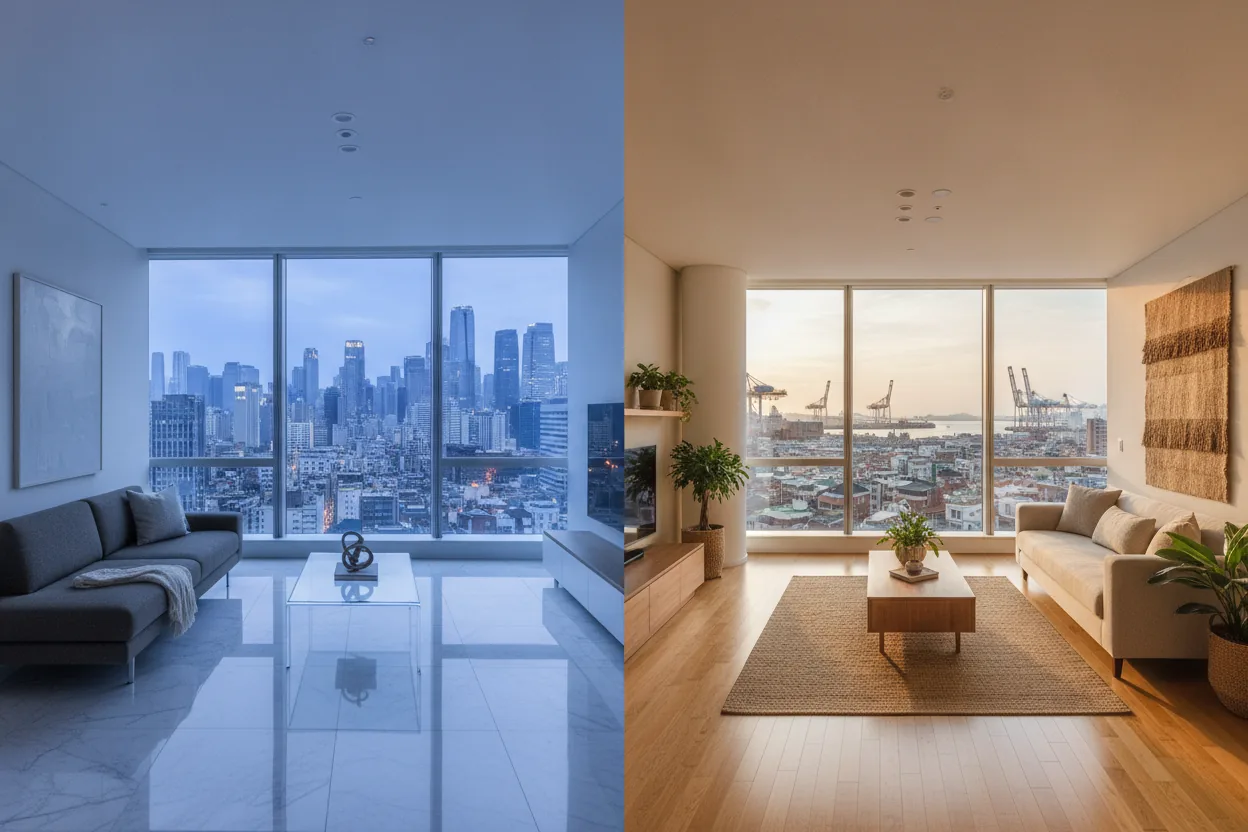
A two bedroom flat in Gangnam runs somewhere around ₩2,500,000 a month, according to some estimates. The identical floor plan in Busan or Incheon rents for about ₩1,500,000. An entire second rent, gone, just because of a postal code. Guidebooks average these numbers into one tidy cost of living figure, but nobody living here budgets off an average. You budget off which side of the cliff you happen to be standing on. So is Korea cheap or expensive? Depends entirely on which system, and which neighborhood, you learn to read before you sign anything.
That Gangnam to Busan gap, roughly $1,250 a month at current rates, isn't the only cliff hiding under Korea's tidy averages. There's also key money, the deposit system that trips up almost every newcomer. Widely cited figures put it anywhere from roughly ₩5,000,000 to ₩50,000,000 depending on contract type. Korea's cost of living isn't expensive or cheap in any absolute sense. It's a system of steep regional and structural cliffs, and the people who thrive here are the ones who learn where those cliffs are before they walk off one.
Choosing Where You Sleep Changes Everything
Housing Costs Across Korea's Rental Markets
| Housing Type | Seoul/Gangnam | Busan/Other |
|---|---|---|
| 2BR Apartment Rent | ₩2,500,000/mo | ₩1,500,000/mo |
| Coliving Room | $800 to $1,500/mo | ~$600/mo |
| Airbnb (per stay) | Tourist pricing | Tourist pricing |
Same floor plan, same coliving style, but location alone drives a large share of the price difference.
Source: Source: Article estimates, Hoppin House and Hive Arena listings, various guidebook figures
Housing in Korea isn't one market. It's at least four markets wearing the same vocabulary. A long term apartment lease, a coliving arrangement, a short term Airbnb, and a goshiwon or officetel rental all use similar terms like deposit and monthly fee, but the economics underneath differ sharply.
Standard leases still run on the jeonse or wolse system, where a large upfront deposit, the key money mentioned above, buys a lower monthly rent. Put down ₩30,000,000 in Seoul and the monthly obligation might fall by a third compared to a no deposit contract on the same unit. Most foreigners on shorter visas never even see this option, because banks and landlords both want proof of long term residency before they'll discuss key money at all. That pushes newcomers toward pricier month to month arrangements almost by default.
Coliving has filled that gap over the past few years, and it's grown fast enough now that it deserves its own category rather than a niche for backpackers. Places popular with the remote work crowd, Hoppin House and Hive Arena among them, run $800 to $1,500 monthly (roughly €750 to €1,400) all in, meaning wifi, utilities, and usually some communal kitchen or lounge space included. Move to Busan or Daejeon and the same style of room runs 20 to 30 percent lower, closer to $600 or €560 a month. The coliving premium in Seoul is about location, not service. The room itself barely changes between cities.
Airbnb sits above both of these for anything longer than a week. It's priced for tourists, not residents, and most hosts in Seoul and Jeju price accordingly. The math only works for stays under two weeks. Past that point, even a mediocre officetel on a monthly contract beats nightly platform pricing. That same gap between tourist pricing and resident pricing shows up again once the spending moves from apartments to attractions.
Spending A Day Out Costs Less Than People Assume
What a Day Out Actually Costs
| Attraction | Price (KRW) | Price (USD approx) |
|---|---|---|
| Seoul Grand Park and Zoo | ₩5,000 | $3.80 |
| Busan Aquarium (Haeundae) | ₩29,000 | $22 |
| Lotte World | ₩61,000 | ~$46 |
| Everland | ₩64,000 | ~$48 |
Even the biggest theme parks stay below $50, well under Universal Studios Singapore or Tokyo Disneyland, both above $70.
Source: Source: Article estimates for Everland, Lotte World, Seoul Grand Park and Zoo, Busan Aquarium
Theme parks and attractions in Korea are priced for a domestic audience with domestic wages, and this is one of the few categories where Seoul doesn't charge a premium over the rest of the country. Everland, the big theme park south of Seoul in Yongin, is estimated to charge somewhere around ₩64,000 for general admission. Lotte World, the indoor and outdoor hybrid in Jamsil, follows closely at ₩61,000 for a full day pass. Universal Studios Singapore and Tokyo Disneyland both sit well above $70 for a single day ticket, which makes Korea's major parks look almost old fashioned in their pricing by comparison.
Public and municipal attractions sit even further from tourist expectations. Seoul Grand Park and Zoo charges ₩5,000 per adult, about $3.80, which lands closer to a subway fare than an entrance fee. The Busan Aquarium at Haeundae charges ₩29,000, about $22, steep next to the zoo but still cheaper than most single meals in Gangnam.
A family of four can visit Everland, the aquarium, and a municipal zoo across three separate days for roughly what a single day at a comparable American theme park costs one person. That gap rarely surfaces in travel budgeting guides, since guides tend to average things out, and averaging hides exactly the kind of gap that makes Korea worth understanding at a granular level. Food follows a similar pattern: cheap at the bottom, expensive at the top, thin in between. Which sets up the next quiet cost category almost perfectly.
Watching How Convenience Costs Add Up Quietly
Key Money: Korea's Hidden Deposit Cliff
The same word, "deposit," can mean wildly different amounts depending on contract type.
|
Low End Deposit ₩5,000,000 Typical entry level key money |
High End Deposit ₩50,000,000 High end jeonse style contract |
Effect of a ₩30,000,000 deposit in Seoul
Monthly rent drops by about one third
Source: Source: Widely cited figures on jeonse and wolse deposit ranges, as referenced in the article
Streaming and small daily convenience costs are where a lot of foreign residents quietly overspend, mostly because nobody bothers to research these prices before arriving. Netflix in Korea runs tiers similar to the US market, with the ad supported plan around ₩5,500 monthly and the premium 4K tier closer to ₩17,000. Coupang Play, bundled into a Coupang Wow membership at roughly ₩7,890 monthly, doubles as a shopping subscription, which is part of why it's become the default for people who already order groceries through Coupang. Wavve and Tving, the two big domestic platforms for Korean drama and variety shows, sit in the ₩7,900 to ₩13,900 range depending on tier, and neither overlaps with Netflix's catalog. Serious drama watchers often end up paying for two services at once without quite meaning to. Pricing for these platforms shifts every few months as competition intensifies, so treat these figures as a general range and check current pricing directly before committing to an annual plan.
Convenience store spending is the other quiet leak. A can of coffee or a triangle kimbap at GS25 or CU costs ₩1,500 to ₩3,000. Trivial on its own. But multiply that by daily visits over a month and it becomes a real line item, often ₩150,000 or more, one that rarely shows up when people estimate their own budgets in advance. Olive Young memberships work in the opposite direction: the free tier already gets decent member pricing on skincare, and the paid membership tiers mostly make sense for people buying cosmetics in bulk rather than someone picking up a single sunscreen.
None of these individual prices are dramatic on their own. It's the pattern across categories, housing, attractions, daily convenience, that matters. And that pattern is the answer to the question this post opened with: Korea isn't cheap or expensive, it's unevenly priced. The gap between a resident who has mapped where the cliffs sit and one who hasn't often runs several hundred dollars a month, invisible on any single receipt but obvious across a full year.