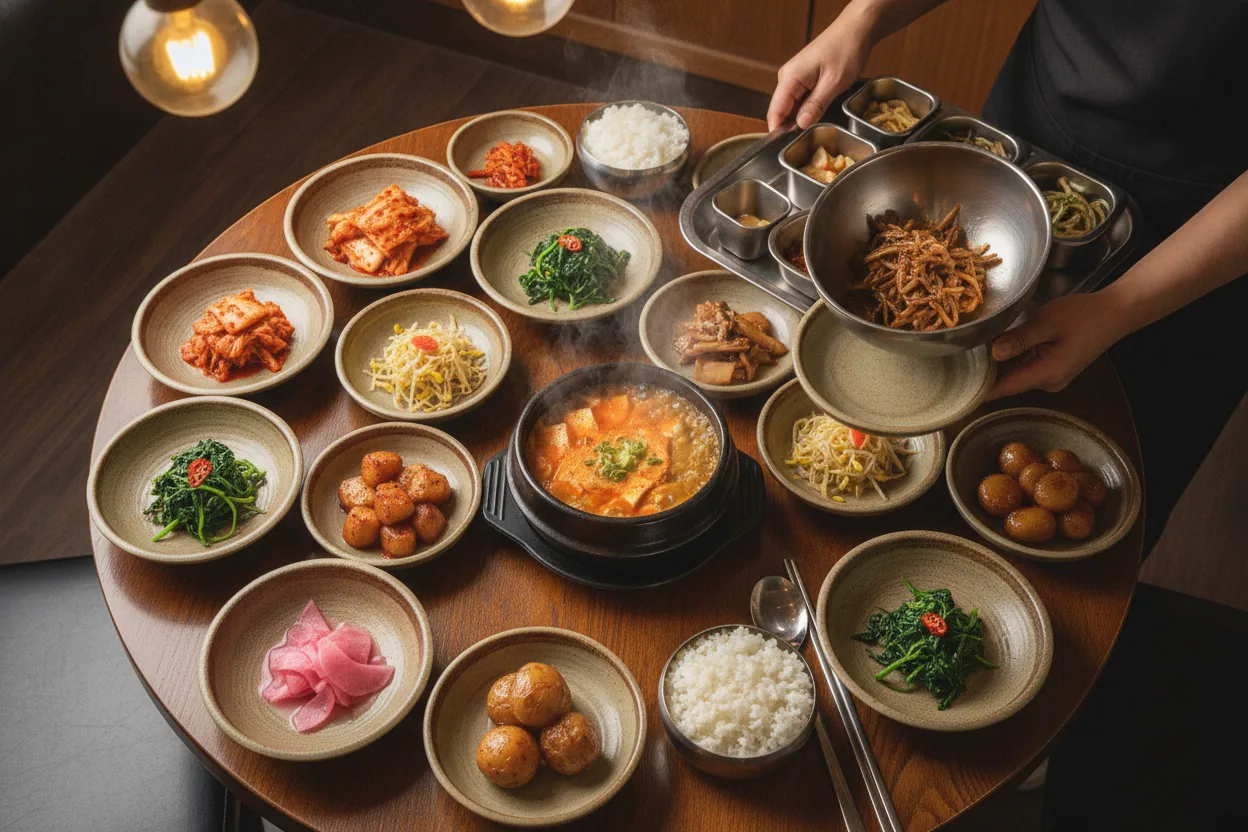
What Banchan Are and How They Work at the Table
Finish a bowl of kimchi at a Korean restaurant, raise your hand, and staff will bring more. No charge added to the bill, even if the table already holds ten or more small side dishes. To an outsider used to paying for every extra, that looks like a business model that shouldn't survive. Yet Korea has run it this way for decades. So what actually makes free unlimited banchan make sense?
The spread isn't random. Each dish plays a specific role on the palate, and a typical table mixes spicy, salty, sweet, and mild flavors in the same sitting. You can see that logic just by looking at what shows up:
- Kimchi, the fermented vegetable dish that anchors nearly every Korean meal
- Seasoned bean sprouts and stir-fried potatoes as the mild counterweights
- Pickled radish and vinegar-preserved vegetables, tangy stuff that keeps for months
- Mini omelettes or spicy rice cakes at the richer, more elaborate spreads
- And at some restaurants, ten or more banchan on the table at once, a scale used to signal generosity or mark a special occasion
First-time visitors usually notice the sheer number of dishes before anything else. That's the clearest sign that Korean dining is built around variety and shared texture, not one centerpiece plate. A table crowded with small dishes before the main course even lands, that's what sets Korean meals apart from most other dining traditions visitors have tried. But the number of dishes isn't really the interesting part. The real question is why restaurants refill all of them for free.
Why Refills Are Free and Where the Custom Comes From
Refills on banchan cost nothing at most Korean restaurants, and that's the detail that catches international diners off guard. Finish a bowl of seasoned spinach or kimchi, raise a hand, and staff bring more without adding a line to the bill. The custom comes from two very different places: one religious, one economic.
The religious layer dates back to the early Korean kingdoms, when Buddhism shaped how the country ate and discouraged meat, pushing vegetable-based side dishes to the center of the table. The economic layer is newer. Historians point to the hard years after the Korean War, when vegetables were cheaper and easier to grow than rice. Restaurants leaned on refillable banchan to send customers home full, even when the rice or meat on the table stayed modest.
- Early Korean kingdoms, where Buddhist influence limited meat and elevated vegetable dishes
- The post-Korean War years, when vegetables were far more affordable and abundant than rice
- Korean home hospitality norms, which feed guests until they're content, not just until they're fed
- Modern restaurants, in Seoul and everywhere Korean food has traveled, still running the same refill custom today
- Three to ten banchan as a rough baseline, though some places serve a dozen or more without blinking
An outsider sees unlimited free refills and assumes it's bad business. Koreans just see hospitality on a plate. Layer religious diet, wartime economics, and home hospitality norms on top of each other, and you end up with a single free bowl of kimchi that carries all of it. That's the answer to the risk visitors think they're seeing when they first sit down at a table crowded with small plates, and it's why the custom keeps catching people off guard long after they've learned the word for it.