New teachers assume banking comes first, but the ARC controls the entire timeline
Most guides for new English teachers in Korea treat banking as day-two business. That's backwards. No bank will open a full account without the Alien Registration Card, and that document can take up to six weeks to process. Get the order wrong and one misstep snowballs into two or three extra trips to carrier shops and bank branches, right in the middle of the weeks already stuffed with orientation. So what's the sequence that actually works?
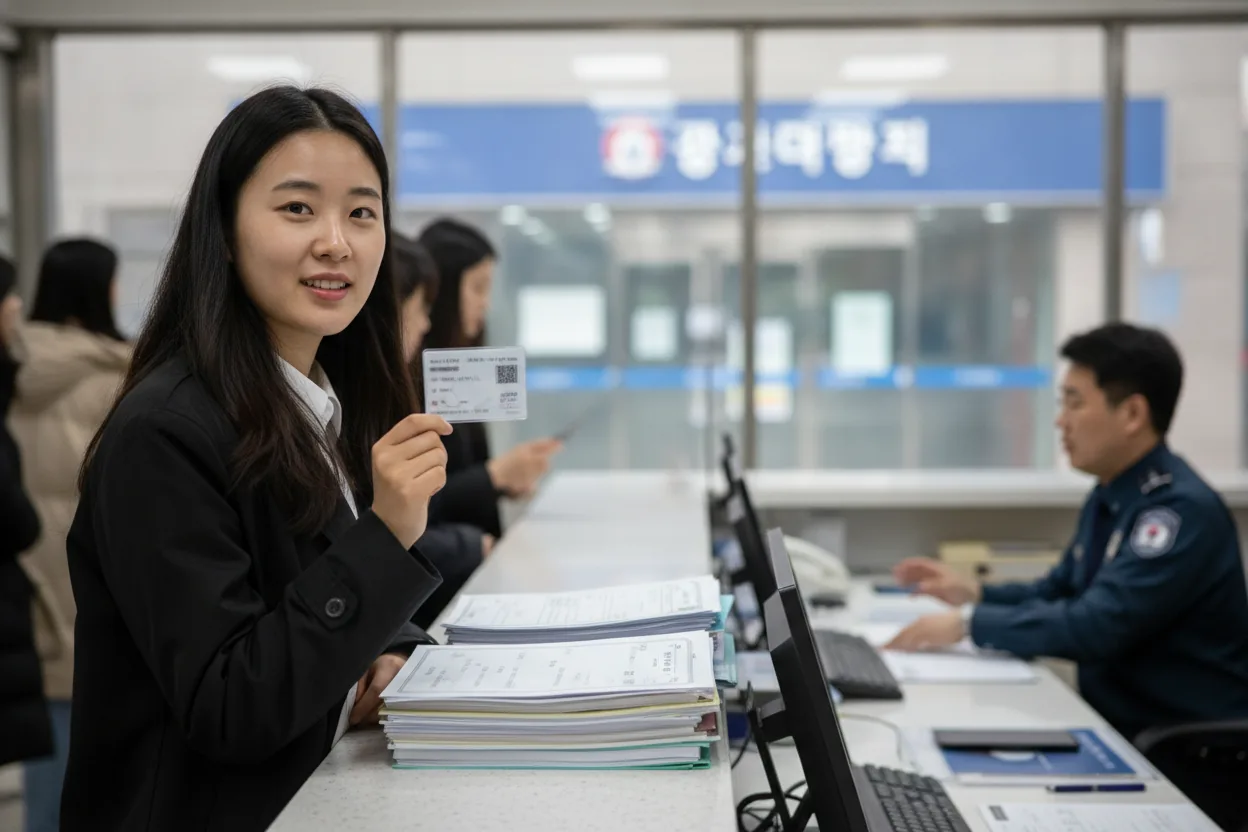
Your school or recruiter, whether that's EPIK, GEPIK, or a private academy, sets up your immigration appointment during your first week in the country. That appointment is where you apply for the RC. Processing runs anywhere from a few weeks to over a month, and the card either shows up by mail or you pick it up in person at the local immigration office. GoldKey Education points out that the RC doubles as a multiple-entry visa for the length of your contract, so it's carrying a lot more weight than a typical ID card ever would.
Until that card exists, banks won't open a full account for you, and carriers won't issue a postpaid phone plan. Most teachers grab a prepaid SIM or eSIM in the meantime, just to have a working number for the first few weeks. That small workaround pays off later, because it means you won't have to change phone numbers once you convert to a full contract.
Here's the thing about the RC: it's not paperwork you file away and forget. It's the key that unlocks banking, mobile service, housing registration, even signing up for delivery apps. Teachers who treat the immigration appointment as a formality rather than the priority often end up stuck for weeks with no working bank account and no phone plan. That gap causes more frustration than any single mistake in the process. The section below walks through the sequence that avoids it entirely.
The correct sequence runs ARC, bank, phone, then mobile banking and Kakao Pay
According to koreaworkexpert.com, the order goes like this: ARC appointment (days 1 to 3 after arrival), ARC issued (roughly days 7 to 14), bank account (days 14 to 16), Korean phone plan (same week or slightly before), mobile banking setup, Kakao Pay, and finally 전입신고, the address registration filed at your local 주민센터 (community center). Doing these out of order is the single biggest cause of delays teachers run into during their first month.
Step one after your RC arrives: the bank account. Bring your passport, E-2 visa, RC (or an employer confirmation letter if the RC is still processing), and a Korean phone number. KEB Hana gets recommended constantly for its English-language app and dedicated foreign customer branches; IBK is also popular among work-visa holders. Most banks activate internet banking within a few business days, but request mobile banking setup at the counter itself. Don't wait. Koreaworkexpert.com is blunt about this: mobile banking is much harder to activate after you've left the branch.
A common snag here is the restricted account problem, where the bank caps your daily transfer limits because you look like a short-term visitor with no employment history. Bring your signed employment contract or a 재직증명서 (employer certificate confirming your position and salary) and this resolves itself in most cases. Skipping that document is one of the most avoidable mistakes new teachers make, and it's easily prevented just by packing the right paperwork before you walk into the bank.
With the bank account settled, step two is the carrier shop. Bring your RC, passport, bank account information, and the prepaid SIM or eSIM phone you've been using. Tell the representative you want to port your existing prepaid number into a 12-month postpaid contract, known locally as 12개월 약정 후불 전환. The whole thing takes about 30 minutes, and Korvia notes that switching from prepaid to postpaid this way often leads to real monthly savings on your phone bill, all without changing your number.
That last detail matters more than it sounds. Your Korean phone number is tied to nearly everything: one-time password (OTP) authentication for banking apps, Kakao Pay verification, even some workplace systems. If your phone is registered under a different name than your bank account, OTP authentication fails outright. Keep the same number through this whole process and you skip re-verifying every linked service from scratch, which can otherwise eat an entire afternoon per app.
Once banking and phone are aligned, two more items round out the sequence. Kakao Pay, the dominant mobile payment app in Korea, requires a verified Korean bank account and phone number, so it naturally slots in after the first two steps. Last comes 전입신고, your lease address registration at the 주민센터, which formalizes your residence for tax and administrative purposes and often gets required later when you renew your RC or apply for other services.
Financially, GoldKey Education recommends showing up with around US$500 in cash and access to another US$500 through an ATM card. Orientation usually covers housing and meals, but your first real salary, plus a settlement allowance and travel allowance, won't land until after you've cleared several of these steps. That buffer covers groceries, transport, and incidental costs while your ARC, bank account, and phone contract crawl through the pipeline. Teachers who show up without that cushion often end up borrowing from coworkers during the exact weeks they should be focused on settling in.
No single step here is hard on its own. It's the order that decides whether your first month runs smoothly or turns into a string of repeat trips to carrier shops and bank branches. ARC first, bank second, phone third, mobile banking and Kakao Pay fourth, address registration last. Follow that sequence and the six-week ARC wait becomes a manageable stretch instead of the bottleneck that derails everything else.