Understand what wolse deposit actually means
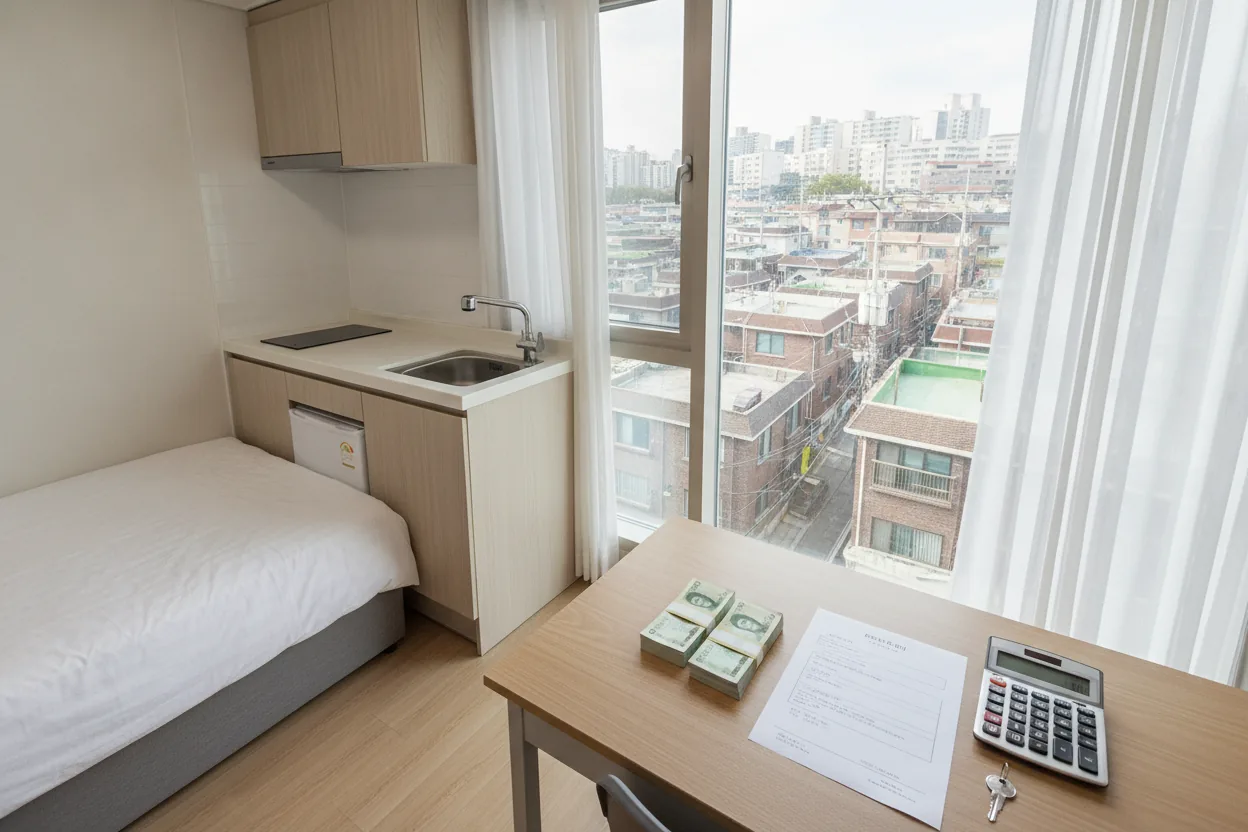
Two nearly identical Seoul studios renting for the same ₩500,000 monthly rent can carry deposits of ₩5 million and ₩10 million. That's a ₩5 million gap with no citywide rule to explain it. Wolse deposits are set landlord by landlord rather than by formula, so what actually determines the number a renter gets asked to pay upfront?
Start with what the deposit isn't: a fee. It's fully refundable at the end of the lease, assuming no damage to the unit, and it works more like a security bond than rent paid in advance. The math behind the number is simple enough. In many cases, Korean landlords calculate the deposit as some portion of what a full year of rent would cost, though local convention varies by district and building age.
Wolse sits alongside two other systems in Korea's rental market. Jeonse (전세) requires a massive lump-sum deposit, typically 50 to 80 percent of a property's market value, with zero monthly rent afterward. In Seoul, the average jeonse deposit runs close to $520,000 USD, or around ₩680 million by industry estimates, about 54 percent of the average apartment price. Co-living spaces sit at the opposite end, with deposits as low as ₩1 million to ₩5 million. Wolse occupies the middle ground, and that's exactly why it's become the default choice for foreign residents, students, and young professionals who can't access jeonse-level capital but still want a private unit rather than a shared room.
This middle-ground position raises the next question directly: if wolse deposits aren't fixed by law, what actually explains the gap between two similar units, and how much of that gap should a renter expect to negotiate?
See why the deposit number moves so much
The 10 to 20 percent rule is a guideline, not a fixed regulation, and this is the detail that catches many renters off guard. If a studio rents for ₩500,000 a month, a landlord might ask for a ₩5 million deposit, sitting exactly at the 10 percent mark referenced in standard Seoul pricing conventions. But another landlord renting a nearly identical unit two blocks away could ask for ₩8 million or ₩10 million for the same monthly rent, simply because deposit levels are set individually by each landlord rather than by a citywide formula.
Here's the practical detail international renters need to internalize before house-hunting: decide on a maximum deposit budget before viewing apartments, not after. Walking into negotiations without a ceiling in mind is the most common way renters end up disappointed or overextended, according to housing guides aimed at foreign residents in Korea.
The deposit and rent also trade off against each other. A tenant can often negotiate a lower monthly rent in exchange for a higher deposit, since landlords benefit from holding more cash upfront. Jeonse runs on the same logic at a larger scale: the landlord invests the entire deposit and earns interest on it for the duration of the contract, which is why jeonse tenants pay no monthly rent at all. Wolse is just a smaller-scale version of that same principle. Deposit size and monthly rent size are always in conversation with each other, and moving one changes what a landlord will accept for the other.
Maintenance fees sit on top of both figures as a separate cost. Wolse contracts in Seoul typically list a maintenance fee apart from the base rent, and utilities like gas and electricity get billed separately too, so a listing showing ₩600,000 monthly rent rarely represents the full monthly cost of living in the unit.
These deposit and rent figures apply specifically to Seoul studios. The next question is how they hold up against other unit types in the same city, and against other cities entirely.
Compare Seoul figures against other cities and unit types
Seoul studio deposits of ₩5 million to ₩10 million sit at the lower end of the city's overall wolse range, which spans ₩5 million to ₩30 million, or roughly $3,750 to $22,500 USD, depending on the unit's size and neighborhood. One-bedroom units in Seoul move the numbers up meaningfully: expect a deposit of ₩10 million to ₩20 million alongside monthly rent of ₩800,000 to ₩1,200,000.
Outside the capital, both deposits and rents drop noticeably. In Busan, Daegu, and Incheon, wolse deposits typically range from ₩3 million to ₩15 million, or roughly $2,250 to $11,250 USD. Global Property Guide data cited alongside Wise exchange figures puts average one-bedroom, city-center monthly rent at around $905 USD in Seoul, compared to $495 in Busan, $416 in Daegu, and $394 in Incheon. Seoul's premium comes from higher rent and higher deposits stacking together.
The jeonse comparison across these same cities makes Seoul's studio wolse deposits look almost modest by comparison. Jeonse deposits in Busan, Daegu, and Incheon run ₩100 million to ₩400 million, or $75,000 to $300,000 USD, while Seoul's jeonse figures climb to ₩200 million to ₩800 million, or $150,000 to $600,000 USD. A Seoul wolse studio deposit of ₩5 million to ₩10 million is a fraction of what jeonse tenants commit to in the same city. That gap is exactly why wolse remains the accessible entry point for renters, foreign residents especially, who don't have the large capital reserves jeonse demands.
These figures raise the obvious follow-up question for anyone comparing systems: why does Korea rely on such a large upfront capital structure in the first place, rather than the pay-as-you-go rent model common elsewhere?
Trace the logic behind Korea's deposit-heavy system
The deposit-based structure traces back to how Korean landlords historically financed property purchases and generated returns without relying on long-term mortgage income. Under jeonse, a landlord receiving a deposit worth 50 to 80 percent of a property's value can invest that lump sum and earn interest or investment returns over the lease term, replacing the income a landlord would otherwise collect through monthly rent. Wolse runs on a smaller version of the same logic: a higher deposit gives a landlord more capital to work with, so landlords price the deposit and the monthly rent as two adjustable levers rather than a single fixed number.
Which answers the question posed at the start: the ₩5 million gap between two identical Seoul studios exists because no formula sets the number, only landlord-by-landlord judgment about how much upfront capital they want versus how much monthly income they're willing to accept instead. For international renters, the practical takeaway is that a Seoul studio's headline rent figure, ₩500,000 to ₩800,000 a month, is only half the picture. The deposit of ₩5 million to ₩10 million needs to be available as cash upfront, separate from any monthly budget, and this upfront capital requirement, not the recurring rent, tends to be the harder hurdle for newcomers to Korea's housing market. Once that deposit is paid and the lease is signed, though, the ongoing math gets far more familiar: a monthly bill, plus separate maintenance and utility charges, much like renting anywhere else in the world.