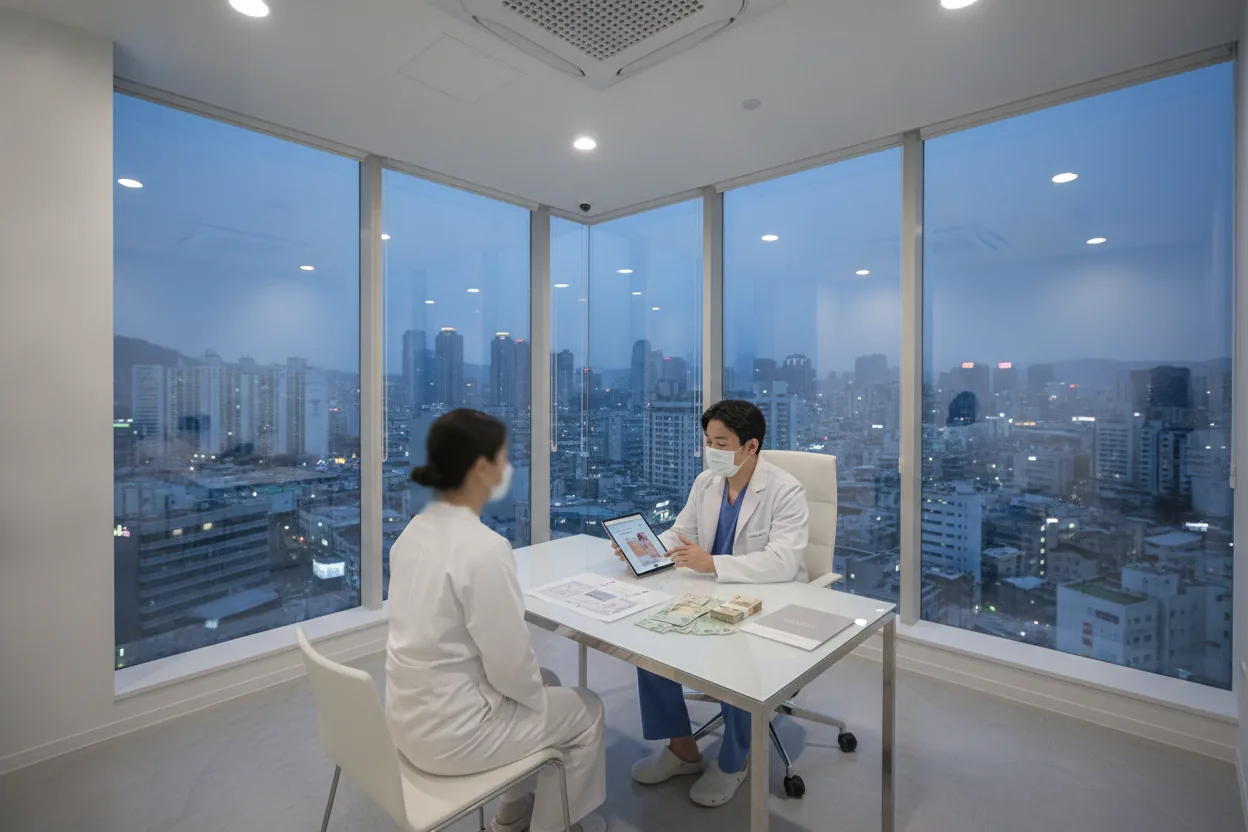
A double eyelid procedure at a Gangnam clinic typically runs somewhere between 800,000 and 1,500,000 won, though prices vary by clinic and should be verified directly. The same procedure in Sydney or Los Angeles starts at three to four times that number before you've even booked the anesthesiologist. That price gap is real, but the savings figure alone can't answer the actual question: does the trip deliver? Patients who arrive knowing only the percentage saved are not the same as patients who know which neighborhood to book, which clinic tier to target, and what a coordinator actually does for them. The cost advantage has existed for over a decade. What's changed in 2026 is how much the knowledge gap between a prepared patient and an unprepared one now determines the answer.
Where the Clinics Are and Why the Neighborhood Matters
Procedure Cost Comparison: Seoul vs. Western Clinics
Procedure Cost Comparison: Seoul vs. Western Clinics
| Procedure | Seoul Range (KRW) | vs. Western Cost |
|---|---|---|
| Double Eyelid Surgery | 800K to 1.5M won | 3x to 4x higher abroad |
| Dental Veneers (per tooth) | 800K to 1.2M won | 2x to 4x higher in US |
| FUE Hair Restoration (2K to 3K grafts) | 3M to 5M won | Significant savings |
| Overall Savings (elective) | 40% to 60% | vs. home country |
Source: Article estimates; verify directly with providers
Source: Article estimates; verify directly with providers
Gangnam, Apgujeong, and Sinsa form the triangle most international patients end up navigating. These are not interchangeable. The Gangnam station corridor is the highest volume zone: hundreds of plastic surgery and dermatology clinics stacked into buildings where the elevator buttons read like a specialty index. It's competitive, which keeps pricing honest, but clinic quality varies enormously within a single block.
Apgujeong has a different character. Clinics here tend to be larger, better staffed for international patients, and priced accordingly. This is where you find facilities with dedicated coordinator desks, multilingual consultation rooms, and real coordination infrastructure before and after procedures. The price premium over basic Gangnam clinics is observable but not dramatic, and for a first-time patient managing their own logistics in a foreign city, that infrastructure genuinely earns its margin.
Sinsa, particularly around Garosu-gil, occupies a middle position. Smaller boutique clinics with strong dermatology specializations dominate here, especially for skin rejuvenation work like Rejuran Healer, exosome therapy, and laser pigmentation treatments. These aren't the celebrity surgery addresses. They're the clinics where locals who actually live in the neighborhood go for maintenance. A high ratio of Korean return patients to first-time foreign visitors is a meaningful signal about consistent outcomes.
General hospitals with international patient departments exist outside this triangle entirely. Severance, Asan Medical Center, Samsung Medical Center: these serve a different category of patient, typically people seeking oncology consultations, complex orthopedic work, or second opinions on diagnoses made abroad. The cosmetic and dermatology ecosystem and the general hospital ecosystem run on almost separate tracks. Conflating them when planning a trip leads to real confusion about timelines, costs, and what to expect on arrival.
The neighborhood you book into shapes everything that follows, and most international patients only figure that out after they've already arrived.
Reading the Savings Number Honestly
Seoul Medical Tourism: Patient Journey from Planning to Recovery
Seoul Medical Tourism: Patient Journey from Planning to Recovery
Research and Choose Your Zone
Gangnam (volume, competitive pricing), Apgujeong (international infrastructure), or Sinsa (boutique dermatology)
Select Clinic Tier and Coordinator
Match clinic to procedure type. Verify Korean return patient ratio as a quality signal. Engage a coordinator for logistics support.
Confirm Costs Directly
Get itemized quotes. Savings of 40 to 60 percent are directionally accurate but vary by procedure and clinic tier.
Procedure and Immediate Aftercare
Apgujeong clinics offer strongest post-procedure coordination. General hospitals serve oncology and complex cases on a separate track.
Recovery and Follow-Up
Plan recovery time in Seoul before flying. Confirm follow-up protocol with your clinic before departure.
Source: Article content
Source: Article content
The 40 to 60 percent savings figure that circulates in medical tourism discussions is directionally accurate, but it compresses a lot of variation into one comfortable statistic. Savings are largest and most consistent in cosmetic dermatology and elective plastic surgery. They're real but narrower for dental work, and they depend heavily on which Korean clinic tier you're comparing against which origin country baseline.
A full set of dental veneers at a premium international patient clinic in Gangnam might run 800,000 to 1,200,000 won per tooth. The same work at a comparable quality clinic in the United States could run two to four times higher per tooth. Hair restoration shows a similar spread. Korea has developed genuinely strong clinical depth here. A 2,000 to 3,000 graft FUE procedure at a specialized Seoul clinic may land somewhere in the range of 3,000,000 to 5,000,000 won, though prices vary considerably by clinic and graft count and should be confirmed directly with providers. Comparable work in the UK or Australia at a reputable clinic frequently exceeds double that figure.
What no savings percentage captures is the coordination cost paid in time and cognitive load rather than money. Booking independently without language support, navigating between consultations across three Gangnam buildings in a single day, managing post-procedure care instructions in Korean: these are real frictions. A medical tourism coordinator isn't just a translator. They handle timeline management, expectation calibration, and they're the person whose number you actually have when something feels off on day three of recovery.
Some industry analyses suggest plastic surgery accounts for roughly 11 percent of all foreign patients by procedure category, though figures vary across sources and should be treated as estimates. That's a surprisingly small share given how much of the public narrative fixates on it. Dermatology, wellness, and dental collectively represent the majority of visits. The skin treatment category specifically, covering Botox, fillers, laser therapies, and newer protocols like exosome therapy, is where Korea's price advantage combines with genuine clinical depth in a way that's hard to replicate elsewhere at the same cost. That combination is what keeps repeat visitors coming back rather than simply chasing the lowest number.
What a Good Coordinator Does That You Cannot Google
Three Seoul Clinic Zones: Key Differences at a Glance
Three Seoul Clinic Zones: Key Differences at a Glance
of clinics per block
Competitive pricing, highest variety, quality varies widely within a single block
coordinator desks, multilingual staff
Larger clinics, stronger international infrastructure, priced at a premium
Korean local return rate
Rejuran, exosomes, laser treatments. Locals-first reputation signals consistent outcomes
Source: Article content
Source: Article content
An IMC isn't a tour guide with a medical vocabulary. At the better-organized clinics and through dedicated medical tourism platforms, a coordinator handles pre-consultation intake in your language, flags whether your treatment goals are realistic for your timeline, manages scheduling across multiple providers if you're combining procedures, and sits in the room during consultations to make sure what the surgeon explained in Korean and what the interpreter relayed to you are actually the same thing. That last part is more valuable than it sounds.
English proficiency at international-facing clinics in Gangnam and Apgujeong has improved significantly over the past several years. Most clinics serving foreign patients have at least one English-speaking coordinator on staff. But medical consultations involve nuanced vocabulary around risk, recovery expectations, and contraindications. A coordinator who's genuinely bilingual in a clinical context, rather than conversationally fluent, is a meaningfully different resource.
Platforms like Jivaka curate partner clinics and provide coordination services to close this gap. The model isn't neutral: they have commercial relationships with their partner facilities, and the curated clinic list reflects those partnerships. That makes it a reasonable starting point and worth cross-referencing against independent patient community forums where Korean medical tourism experiences get discussed in real time. Patients who skip that step tend to pay for it later, either in misaligned expectations or in discovering that a better option existed two buildings away.
Timing Your Stay Around Recovery, Not Just Procedures
Most people underestimate the required stay by several days, sometimes by a full week. A Botox appointment needs a single afternoon. A rhinoplasty needs a minimum of ten to fourteen days in-country for initial swelling assessment and suture removal, and realistically longer if you want a follow-up consultation before flying. Combining procedures extends the timeline further, not just for physical recovery but because reputable clinics won't schedule certain procedures within a compressed window for safety reasons. Full stop.
Getting from Gangnam to Incheon Airport is manageable: the most common routes are a subway transfer connecting to the AREX at Seoul Station, or an airport limousine bus running directly from stops along the Gangnam corridor. Traveling through an international airport with visible post-procedure swelling or bandaging is a different experience than traveling healthy. Plenty of patients handle this well by spending the first several days post-procedure resting in a serviced apartment near the clinic, then moving to a neighborhood like Seongsu-dong or Insadong for the final stretch when they're recovered enough to walk and eat properly. Seoul is a good city for this kind of phased itinerary. The transit network, the food options, and the sheer density of conveniences within any given neighborhood make low-activity days genuinely manageable.
GS25 and CU convenience stores exist in almost every building in Gangnam and stock enough pharmacy-adjacent products, soft foods, and cold compresses that the immediate post-procedure supply chain is never more than an elevator ride away. Olive Young locations across the same neighborhood add wound care staples, SPF recovery products, and sheet masks calibrated for post-treatment skin. Recovery logistics in an unfamiliar city are real, and Seoul handles them better than most.
The patients who report the best experiences in Korean medical tourism forums are almost universally the ones who built more time into the trip than they thought they needed, locked in coordination support before arrival rather than scrambling for it on the ground, and treated the research phase as seriously as the procedure itself. The savings number that draws people to Seoul is real. Whether the trip actually delivers comes down to the preparation done before the flight, and that gap between a well-prepared patient and an unprepared one is still wider than the industry marketing would suggest.