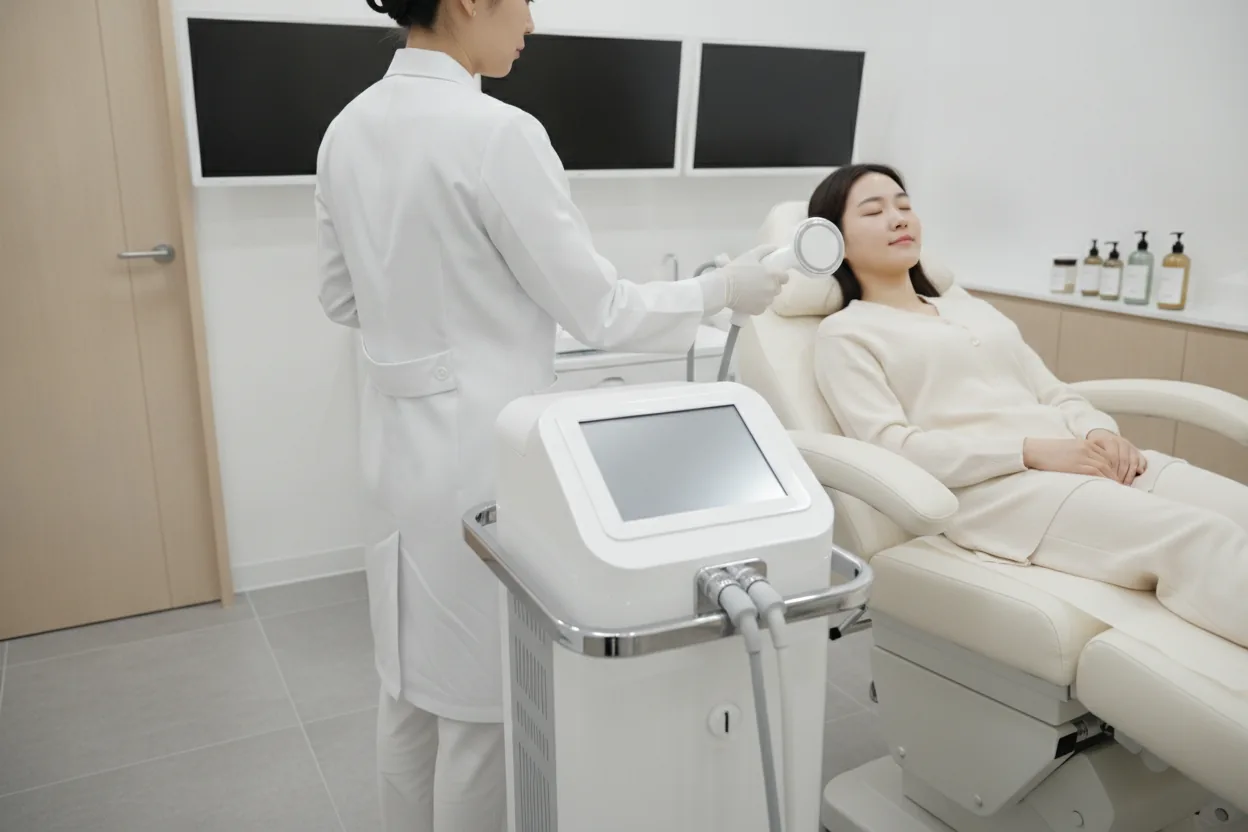
What Korean Dermatology Clinics Actually Offer
A device like Agnes can ablate a sebaceous gland to treat acne at the source. No serum sold anywhere does that. That gap between what Seoul clinics can fix and what a skincare routine can only maintain explains why tourists are booking treatments instead of just packing suitcases full of products. Doesn't mean every visitor needs one, though.
- Devices like BBL HERO and Agnes (a sebaceous gland ablation tool for acne) run more advanced than versions widely available in many other countries.
- Clinics such as Oganacell build multi-layer laser protocols customized to a patient's individual skin map, not one standard setting for everyone.
- Specialists reportedly practicing at Delight Dermatology structure care around several focus areas, some sources say, including anti-aging, pigmentation disorders, acne and scarring, and general skin conditions.
- Some clinics explicitly reject over-treatment. Instead they focus on root-cause analysis for chronic issues like rosacea and barrier-compromised skin rather than repeat symptom management.
- Entry-level treatments, like a basic Aqua Peel add-on, come priced affordably thanks to intense clinic competition in Seoul.
Skincare products can maintain skin and slow visible aging, but they can't ablate a sebaceous gland, correct deep melasma, or restructure damaged texture. If your concern lives at the surface layer, products do the job fine. If it lives deeper, in pigment, scarring, or gland activity, a serum simply can't reach it. That distinction, not brand loyalty, is what separates the tourist who wastes money from the one who actually gets results. And it's exactly why tourists now fly in for procedures instead of shopping lists.
Why Tourists Are Choosing Clinics Over At-Home Routines
Korean skincare didn't get weaker. Korean clinics became a comparison point for what's possible elsewhere. Travelers increasingly frame the decision around one question: can I get this treatment, at this quality, for this price, back home. For a lot of specific conditions, the honest answer is no.
- Devices used in Korean clinics carry approval from Korea's regulatory authorities (MFDS) but aren't FDA-approved, and they're not nearly as accessible or affordable in the United States or Europe.
- Clinics increasingly offer English-language consultations directly with the treating doctor, removing a barrier that used to push foreigners toward guesswork.
- Some visitors arrive through personal referrals, contacts connected to entertainment companies or beauty brands, which points to a broader trend: word-of-mouth clinic selection replacing walk-in tourism.
- Clinics such as Mine Plastic Surgery & Dermatology reportedly lean on a consultation-first approach, and that matters because outcome quality depends heavily on correct patient selection and realistic expectations, not just the device sitting on the shelf.
- On-site anesthesiologists and safety certifications, including OR CCTV, have become a selling point for clinics chasing international patients who want assurance before they book.
The gap between insiders and outsiders here really comes down to pacing and access. Korean skincare culture treats results as a slow, consistent build. Plenty of first-time tourists arrive wanting a single visit to produce dramatic change. The clinics that earn long-term trust are the ones who translate that expectation honestly, instead of promising a one-session fix for a problem that took years to form. So no, not every visitor should book a procedure the moment they land. The ones who actually benefit are travelers whose concern is genuinely structural, paired with a clinic willing to say so plainly instead of upselling a device they don't need.